


💊 Do not rely solely on online content for diagnosis or treatment.
📜 Information here is provided “as is” without any warranties.
If you’re like most people, those first 30 minutes after your alarm goes off feel like you’re moving through thick fog. We’ve all been trained to think coffee is the answer, but what if I told you that 5-minute habits that boost energy can actually work faster—and last longer—than that morning cup?
Your body loses 500 to 1,000 milliliters of water overnight, leaving your cells dehydrated and your metabolism sluggish. Meanwhile, your circadian rhythm—the internal clock that governs energy, focus, and alertness—needs specific signals to fully wake up. Coffee can help, sure, but it works better after you’ve given your body what it really needs first.
The truth is, you can feel alert, focused, and genuinely energized within minutes of waking up, no caffeine required. I’m going to walk you through seven simple morning habits that take five minutes or less. Each one is backed by research, and together they create a powerful routine that sets you up for sustained energy all day long.
- Why Your Body Needs a Wake-Up Call (Before Coffee)
- Drink Water First Thing (Hydration Wins Every Time)
- Get Outside for Natural Light (Reset Your Internal Clock)
- Move Your Body with Light Stretching or a Brisk Walk
- Try a 90-Second Cold Shower Finish (Norepinephrine Surge)
- Practice 5 Minutes of Breathwork (Mood Boost in Minutes)
- Eat a Protein-Rich Breakfast (Stabilize Blood Sugar Early)
- 5-Minute Habits That Boost Energy: Quick Comparison
- Putting It All Together: Your 5-Minute Morning Energy Routine
- Why These Habits Work Better Than Coffee Alone
- Final Thoughts: Small Habits, Big Results
- My Experience & Insights
- Morning Energy Audit
- Frequently Asked Questions
Why Your Body Needs a Wake-Up Call (Before Coffee)
Here’s the thing: when you wake up, your brain and body aren’t operating at full capacity yet. Your core temperature is still low, your cortisol levels are rising naturally to help you feel alert, and your metabolism is just starting to switch gears.
Drinking coffee the moment you open your eyes can actually backfire. Dr. Michael Howell, a Professor and Vice Chair for Education in the Department of Neurology at the University of Minnesota, explains that morning sunlight is one of the strongest signals for resetting your body’s circadian rhythm. When you align your morning habits with your biology, you help synchronize your brain and body—something that leads to deeper sleep at night and better energy during the day.
Delaying caffeine for at least an hour after waking prevents cortisol spikes and midday crashes, ensuring that coffee works when you actually need it most. In the meantime, you’ve got a toolkit of natural strategies that can boost your energy faster and more sustainably.
Drink Water First Thing (Hydration Wins Every Time)

The single easiest habit you can adopt is drinking water as soon as you wake up. Overnight, your body loses fluids through breathing and perspiration, and by morning you’re mildly dehydrated.
Drinking 500 milliliters (about 16 ounces) of room-temperature water within 10 minutes of waking rehydrates your cells and kick-starts your metabolism by up to 30% in the first hour. You can add a squeeze of lemon for a dose of vitamin C, or try electrolyte-enhanced water if you want to replenish sodium, magnesium, and potassium more effectively.
Why does this work so well? Your neurons and nervous system depend on electrolytes to fire properly, and hydration helps improve digestion and mental clarity right away. It’s a simple reset that takes less than a minute but pays off immediately.
Get Outside for Natural Light (Reset Your Internal Clock)

If there’s one habit that delivers outsized returns for almost zero effort, it’s stepping outside into natural light. Morning sunlight directly signals your suprachiasmatic nucleus (SCN)—the part of your brain that controls your circadian rhythm.
Research shows that every 30 minutes of sunlight before 10 a.m. can advance your sleep midpoint by 23 minutes and improve sleep quality. Dr. Howell notes that bright morning light realigns both your internal clock and related physiological components, leading to quicker adjustments in energy levels, hormonal balance, and overall health.
You don’t need a full morning hike—just 10 to 15 minutes outside, or even sitting near a bright window, is enough to shake off sleepiness and feel naturally energized. This habit also primes your body to wind down more easily at night, creating a positive cycle of better energy and better sleep.
Move Your Body with Light Stretching or a Brisk Walk
After hours of lying still, your muscles and joints are stiff, and your circulation is slow. Engaging in light movement for just 10 to 15 minutes increases blood flow, releases endorphins, and wakes up your entire system.
Research from the National Center for Biotechnology Information (NCBI) suggests that light aerobic activity or a brisk walk boosts heart rate, raises brain blood flow, and helps shift your energy set-point upward for the morning. Repeated studies show that morning exercise can advance your circadian rhythm and improve subjective energy and metabolic markers.
You don’t need an intense workout. Simple stretches like a standing forward fold, cat-cow stretch, or low lunge with side stretch are enough to fight off stiffness, improve posture, and create an instant lift in energy. Within five minutes, you’ll notice your body feels lighter, your mind feels clearer, and you’re ready to move with more power throughout the day.
Try a 90-Second Cold Shower Finish (Norepinephrine Surge)
This one might sound intimidating, but it’s incredibly effective. A 2024 study published in PLOS One found that ending your shower with 30 to 90 seconds of cold water increases circulating norepinephrine by 200 to 300%.
Norepinephrine (also called noradrenaline) is a neurochemical that makes you feel alert and focused. Cold exposure stimulates the release of norepinephrine in your brain and body, and these levels stay elevated for some time after the exposure. The ongoing effect is increased energy and focus that you can apply to other mental or physical activities.
You don’t need to stand under freezing water for minutes. Just finish your regular shower with 30 to 90 seconds of cold water, and you’ll feel the difference immediately. Research also shows that cold exposure activates brown adipose tissue (BAT), which burns energy and may support metabolic health over time.
Practice 5 Minutes of Breathwork (Mood Boost in Minutes)
Controlled breathing might sound too simple to matter, but the science is clear: it works. A 2023 study published in the journal Cell Reports Medicine found that just five minutes of daily breathwork improves mood and reduces anxiety more effectively than mindfulness meditation.
The study compared three different breathing exercises and mindfulness meditation over one month. The breathwork group—especially those practicing cyclic sighing (a breathing pattern with extended exhales)—showed greater improvement in positive affect and a significant reduction in respiratory rate. The more days participants practiced, the more they benefited.
Deep breathing stimulates your brain, helps you focus better, memorize more effectively, and regulate emotions. Breathing exercises also reduce cortisol levels and promote alpha and theta brainwave patterns, which are associated with relaxation and learning. You can try simple techniques like box breathing (inhale for four counts, hold for four, exhale for four, hold for four) or cyclic sighing (deep inhale, short second inhale, long exhale) to start your day with calm, focused energy.
Eat a Protein-Rich Breakfast (Stabilize Blood Sugar Early)

What you eat in the morning has a huge impact on how you feel for the rest of the day. Skipping breakfast or reaching for sugary foods can leave you feeling drained and craving snacks by mid-morning.
Eating a protein-rich breakfast promotes balanced cortisol levels, improves insulin sensitivity, and reduces mid-morning cravings. Options like eggs with whole-grain toast, Greek yogurt with nuts, oatmeal with protein and fruit, or a smoothie with protein and vegetables provide a steady release of energy rather than a quick spike and crash.
Starting your day with the right nutrients gives your brain and body the stamina to tackle tasks without energy dips. A balanced breakfast that combines protein, healthy fats, and complex carbohydrates keeps you feeling full and focused for hours.
5-Minute Habits That Boost Energy: Quick Comparison
Here’s how these seven habits stack up in terms of time, effort, and impact:
| Habit ↕ | Time Required ↕ | Key Benefit ↕ | Actions |
|---|---|---|---|
| Drink water first thing | 1 minute | Rehydrates cells, kick-starts metabolism by 30% | |
| Get natural sunlight | 10–15 minutes | Resets circadian rhythm, improves sleep quality | |
| Light stretching or walk | 10–15 minutes | Increases blood flow, releases endorphins, improves focus | |
| 90-second cold shower | 30–90 seconds | Increases norepinephrine by 200–300%, boosts alertness | |
| 5-minute breathwork | 5 minutes | Improves mood, reduces anxiety, lowers respiratory rate | |
| Protein-rich breakfast | 5–10 minutes | Balances cortisol, stabilizes blood sugar, reduces cravings | |
| Delay caffeine 1 hour | 0 minutes (just wait!) | Prevents cortisol spikes, avoids midday crashes |
Drink water first thing
Science Behind It: Body loses 500–1,000 ml water overnight
Get natural sunlight
Science Behind It: Morning light advances sleep midpoint by 23 minutes per 30 min exposure
Light stretching or walk
Science Behind It: Morning exercise advances circadian rhythm, boosts metabolic markers
90-second cold shower
Science Behind It: Cold exposure stimulates sympathetic nervous system
5-minute breathwork
Science Behind It: Breathwork increases positive affect more than meditation
Protein-rich breakfast
Science Behind It: Protein improves insulin sensitivity, prevents energy crashes
Delay caffeine 1 hour
Science Behind It: Cortisol naturally peaks in morning; caffeine works better later
Putting It All Together: Your 5-Minute Morning Energy Routine
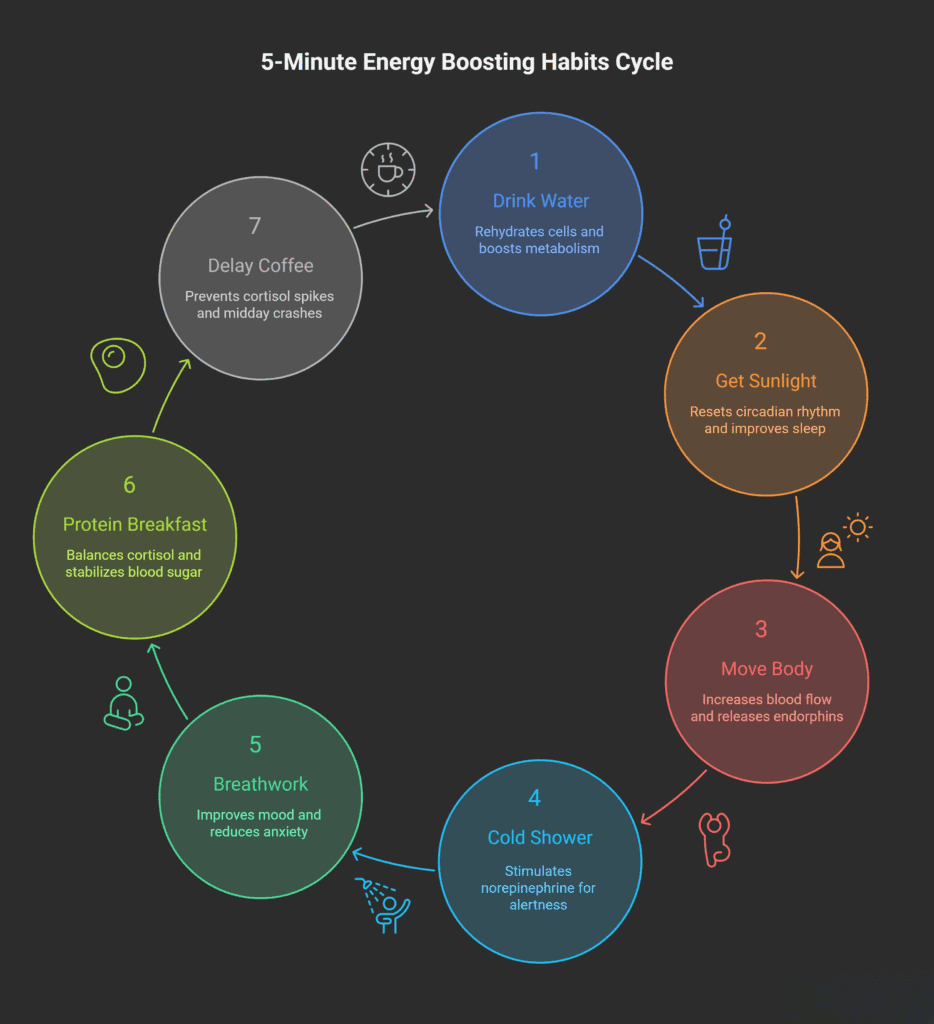
You don’t have to do all seven habits every single morning. Start with one or two that feel easiest, and build from there. Here’s a simple sequence you can follow:
- Wake up and drink water (1 minute) – Rehydrate immediately to kick-start your metabolism.
- Step outside for sunlight (10 minutes) – Reset your circadian rhythm and boost alertness naturally.
- Do light stretches or take a brisk walk (10 minutes) – Increase circulation and release endorphins.
- Finish your shower with cold water (30–90 seconds) – Trigger a norepinephrine surge for sustained focus.
- Practice breathwork (5 minutes) – Calm your nervous system and improve mood.
- Eat a protein-rich breakfast (10 minutes) – Stabilize blood sugar and fuel your brain.
- Wait an hour before coffee (0 minutes) – Let your natural cortisol rhythm do its job first.
The entire routine takes about 30 to 40 minutes, but even picking two or three habits will make a noticeable difference. The key is consistency—when you repeat these habits daily, your body learns to wake up faster, feel more alert, and sustain energy without relying on caffeine alone.
Why These Habits Work Better Than Coffee Alone
Coffee isn’t the enemy—it’s just not the complete solution. Caffeine blocks adenosine receptors in your brain, which temporarily makes you feel less tired. But if you’re dehydrated, your circadian rhythm is out of sync, and your body temperature is still low, coffee can only do so much.
By addressing the root causes of morning sluggishness—dehydration, circadian misalignment, stiff muscles, and low norepinephrine—you give your body what it actually needs to feel energized. When you do have coffee an hour or so later, it works more effectively because your system is already primed.
Research on circadian rhythm and metabolic processes shows that energy balance is regulated by your internal clock, and short-term disruptions are associated with impaired wellness, fatigue, and loss of concentration. By using these five-minute habits to support your circadian rhythm, you’re setting yourself up for better energy, mood, and focus all day long.
Final Thoughts: Small Habits, Big Results
The beauty of these habits is their simplicity. You don’t need expensive supplements, complicated routines, or hours of free time. Just a few intentional minutes each morning can transform how you feel—not just in the moment, but throughout the entire day.
Start small. Pick one habit this week and make it non-negotiable. Maybe it’s drinking water first thing, or stepping outside for 10 minutes of sunlight. Once that feels automatic, add another. Over time, you’ll build a morning routine that supports your biology, boosts your energy naturally, and helps you feel more alive—all before you’ve had a single sip of coffee.
Your mornings set the tone for everything that follows. Make them count.
This article is part of our 5 Powerful Small Daily Habits That Transform Your Life pillar guide, where we explore simple, realistic habits that compound over time to improve energy, focus, and overall well-being.
My Experience & Insights
While researching morning energy patterns for this article, I kept coming across a fascinating disconnect: most people know they should drink water first thing or get outside for sunlight, but they don’t actually know which habits would make the biggest difference for their specific situation. Some people wake up dehydrated and foggy. Others struggle with energy crashes by mid-morning despite sleeping a full eight hours. The underlying causes vary widely from person to person.
That’s why I decided to build something practical—a Morning Energy Audit that takes about 60 seconds to complete. It’s a simple assessment that asks you about your current sleep quality, hydration habits, morning routine, and typical energy slumps throughout the day. Based on your answers, it calculates a personalized energy score and gives you three specific recommendations tailored to your biggest energy drains.
For example, if you’re consistently waking up groggy despite getting enough sleep, the tool might flag that you’re not getting enough morning light exposure—a pattern I noticed in research published by the Sleep Foundation showing that light exposure timing directly affects how quickly your brain fully wakes up. Or if you’re experiencing afternoon crashes, it might point to skipping breakfast or relying too heavily on caffeine too early in the day, both of which disrupt your natural cortisol rhythm throughout the morning.
What I found most interesting during my research was how interconnected these habits are. Dr. Michael Howell, the University of Minnesota neurologist I mentioned earlier, has published work showing that morning sunlight doesn’t just help you feel awake—it actually sets up your entire 24-hour rhythm, making it easier to fall asleep at night and wake up naturally the next day. When I tested this myself (stepping outside for 10 minutes every morning before looking at my phone), I noticed I stopped needing an alarm within about two weeks. My body just started waking up on its own around the same time each day.
The cold shower habit was the hardest one for me to adopt. I’ll be honest—I dreaded it at first. But after reading the research on cold exposure and norepinephrine published by Stanford’s Huberman Lab, I committed to trying it for 30 days. I started with just 15 seconds of cold water at the end of my shower and gradually worked up to 60 seconds. The alertness boost was undeniable. It felt like flipping a switch in my brain—suddenly I was awake, focused, and ready to start my day without that usual grogginess.
Another insight that surprised me: the timing of breakfast matters almost as much as what you eat. I used to grab coffee first thing and eat breakfast an hour or two later, thinking I was “optimizing” my morning. But research on circadian metabolism shows that eating protein within the first hour of waking helps stabilize blood sugar and keeps your energy steady throughout the morning. Once I switched to eating breakfast earlier (usually within 30 minutes of waking up), I stopped experiencing those mid-morning energy dips that used to derail my focus.
If you’re not sure where to start, I recommend taking the Morning Energy Audit I created. It’ll help you identify which one or two habits will give you the biggest return on your effort. You don’t need to overhaul your entire routine overnight—just pick the habit that addresses your biggest energy drain, make it consistent for two weeks, and then add another. Small, intentional changes compound over time, and that’s when you’ll really notice the difference in how you feel all day long.
Morning Energy Audit
Answer these quick questions to discover your biggest morning energy drains and get three science-backed fixes personalized for you.
Frequently Asked Questions
How long does it take to feel more energized in the morning without coffee?
Most people notice a difference within the first 5 to 10 minutes of adopting habits like drinking water and getting natural sunlight. Hydration alone can boost your metabolism by up to 30% within the first hour of waking. However, for sustained, long-term energy improvements, consistency is key—practicing these habits daily for 2 to 3 weeks helps reset your circadian rhythm and creates lasting changes in how alert you feel each morning.
Can I still drink coffee after doing these morning habits?
Absolutely! These habits aren’t meant to replace coffee—they’re designed to make it work better. By waiting at least an hour after waking to drink coffee, you avoid interfering with your natural cortisol peak and prevent midday crashes. Once you’ve hydrated, gotten sunlight, and eaten breakfast, your body is primed to use caffeine more effectively when you actually need it.
What if I don’t have time for all seven habits in the morning?
You don’t need to do all seven habits every day. Start with just one or two that address your biggest energy drain. For example, if you struggle with grogginess, prioritize drinking water immediately upon waking and getting 10 minutes of natural sunlight. If you experience afternoon crashes, focus on eating a protein-rich breakfast and delaying coffee. Even adopting two habits consistently can create noticeable improvements in your energy levels throughout the day.
Does the cold shower really work, or is it just a trend?
The science backs it up. Research shows that 30 to 90 seconds of cold exposure increases norepinephrine levels by 200 to 300%, which makes you feel more alert and focused. You don’t need to endure a full cold shower—just finishing your regular warm shower with cold water for 30 to 90 seconds is enough. Many people find the initial discomfort is worth the immediate boost in mental clarity and energy.
What’s the best type of breakfast for sustained energy in the morning?
The best breakfast combines protein, healthy fats, and complex carbohydrates to stabilize blood sugar and prevent energy crashes. Options include eggs with whole-grain toast and avocado, Greek yogurt with nuts and berries, oatmeal with protein powder and fruit, or a smoothie with protein, spinach, and banana. Eating protein within the first hour of waking helps balance cortisol levels and reduces mid-morning cravings.
How does morning sunlight actually help with energy and sleep?
Morning sunlight signals your suprachiasmatic nucleus (SCN)—the brain’s master clock that controls your circadian rhythm. Research shows that every 30 minutes of sunlight before 10 a.m. can advance your sleep midpoint by 23 minutes, helping you fall asleep easier at night and wake up more naturally in the morning. This creates a positive cycle: better morning energy leads to better nighttime sleep, which leads to even more energy the next day.
💊 Do not rely solely on online content for diagnosis or treatment.
📜 Information here is provided “as is” without any warranties.