
💊 Do not rely solely on online content for diagnosis or treatment.
📜 Information here is provided “as is” without any warranties.

Ever feel like you’re just not getting enough from your daily walks? I’ve been there too. But here’s the exciting part: you can transform every single walk into a fitness hack walking strength session that builds muscle, strengthens bones, and torches calories without stepping foot in a gym.
Walking alone is wonderful for our hearts and helps us stay mobile. But when we add resistance or weight, something amazing happens. Our muscles work harder, our bones get stronger, and we burn way more energy—sometimes up to three times more calories than a regular walk. Think of it as sneaking in a strength workout while you’re already out moving your body.
The best part? You don’t need fancy equipment or a personal trainer. Simple tools like resistance bands, a weighted backpack, or even a vest can turn your neighborhood stroll into a complete workout. And science backs this up—studies show that combining walking with strength-building tactics gives us better results than doing either one alone.
- Why Walking Alone Isn’t Enough
- Fitness Hack: Add Weight to Your Walk
- Walking Strength with Resistance Bands
- Comparing Walking Methods
- The Science Behind Combined Training
- How to Start Your Walking Strength Routine
- Real-World Benefits You’ll Notice
- My Experience & Insights
- Walking Strength Calculator
- Frequently Asked Questions
Why Walking Alone Isn’t Enough
We’ve all heard that 10,000 steps a day keeps us healthy. And it does help with cardiovascular health! Walking builds endurance, supports our heart, and keeps our lower body moving. But there’s a catch—walking by itself doesn’t challenge our muscles enough to make them stronger or protect our bones as we age.
Dr. Rachelle Reed, an exercise physiologist with a PhD and certification from the American College of Sports Medicine, points out that while walking is a great starting place for people who haven’t been active, we should work up to including both types of exercise for real longevity benefits. She notes that walking preserves lower-body strength but doesn’t give us the full-body muscle engagement we need.
Here’s what regular walking misses:
- It doesn’t put enough stress on bones to trigger new bone growth (which we need to prevent osteoporosis)
- It works mainly in one direction—forward and backward—so other muscle groups don’t get activated
- It won’t build the kind of muscle mass that keeps our metabolism revved up as we get older
That’s where the strength component comes in. When we add resistance or weight to our walks, we tell our bodies to adapt and get stronger.
Fitness Hack: Add Weight to Your Walk
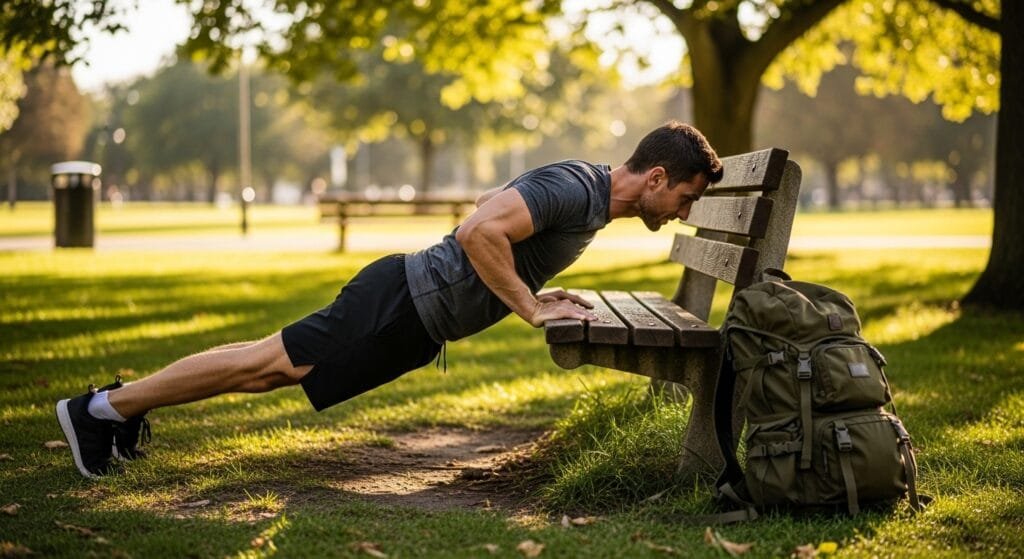
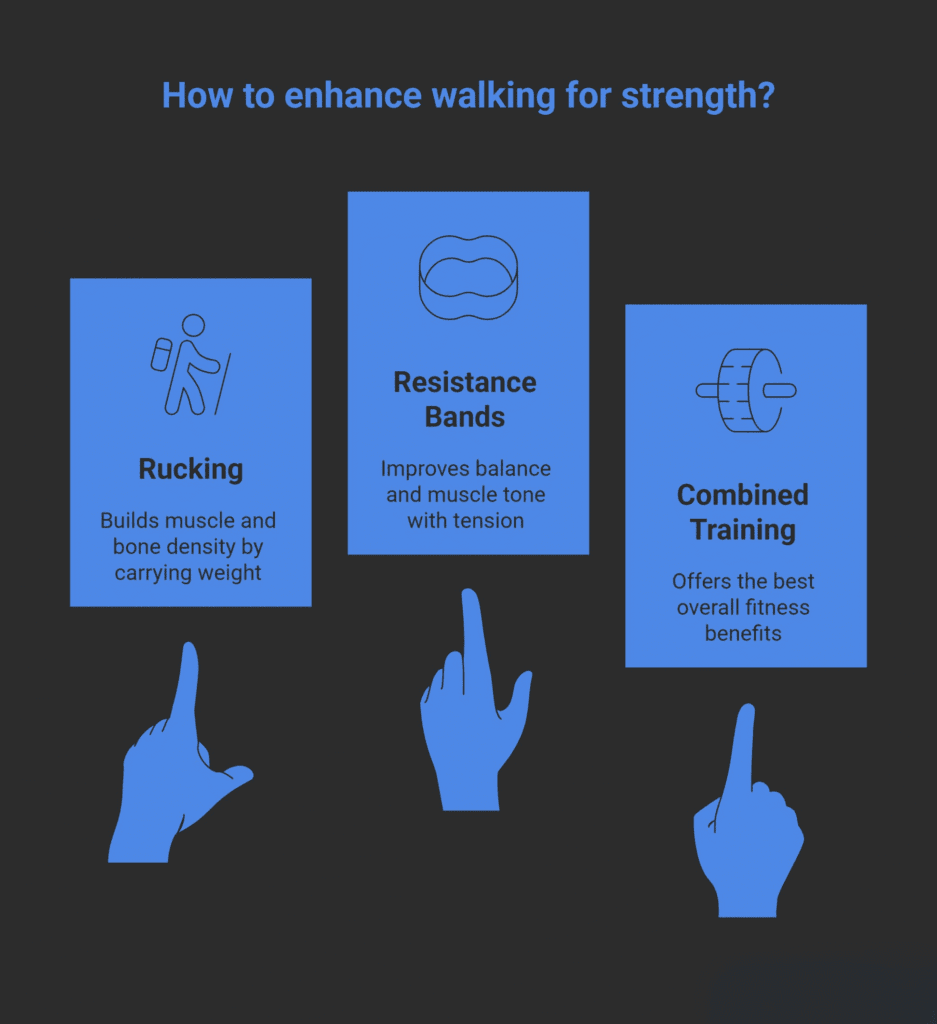
One of the simplest ways to upgrade your walking routine is by adding weight. This technique, called “rucking,” comes from military training where soldiers march with loaded backpacks. But you don’t need to be in the army to benefit from it.
Rucking means walking or hiking with a weighted backpack or vest. When you carry extra weight, your body has to work harder to move the same distance. This fires up muscles in your legs, core, shoulders, and back—giving you a true full-body workout.
Research shows that rucking can burn up to three times more calories than walking without weight, putting it on par with jogging. Plus, studies on older adults (ages 65-74) found that weighted step exercises improved leg muscle strength, power, and overall ability to get around.
Here’s what rucking does for you:
- Builds muscle strength in your core, legs, and upper body
- Increases bone density (critical for preventing fractures later in life)
- Boosts cardiovascular fitness and expands lung capacity
- Improves mental wellness and reduces stress
Start with a light load—about 10-15% of your body weight—and gradually increase as you get stronger. You’ll feel the difference right away, and your body will thank you for years to come.
Walking Strength with Resistance Bands
If carrying a backpack isn’t your thing, resistance bands offer another powerful option. These stretchy elastic bands add tension to your movements, forcing your muscles to work harder with every step.
You can attach bands around your ankles or thighs while you walk. As you move, the bands create resistance that targets your glutes, hamstrings, and quadriceps. This increased muscle activation leads to better tone, improved posture, and enhanced athletic performance.
A 2024 study published in research journals found that resistance band walking significantly changes muscle activation and gait biomechanics depending on where the band is attached and the angle it pulls. Another study showed that resistance band exercises improved balance, gait function, and flexibility—key factors for preventing falls.
Here’s why resistance bands work so well for walking:
- They’re lightweight and portable—you can take them anywhere
- They challenge your balance and coordination, improving stability
- They’re gentle on joints, making them perfect for all fitness levels
- They cost way less than gym equipment or personal training sessions
Dr. Anna Hammond, a physical therapist and orthopedic certified specialist who leads the team at Core Exercise Solutions in Atlanta, cautions that rucking isn’t an “easy button”. She emphasizes that proper form and gradual progression matter—jumping in too fast can lead to injury rather than strength gains.
Comparing Walking Methods
Not sure which approach fits your lifestyle? Here’s a quick breakdown of how different walking styles stack up:
| Walking Method | Calorie Burn | Muscle Groups Targeted | Equipment Needed | Best For |
|---|---|---|---|---|
| Regular Walking | Moderate | Calves, hamstrings, glutes | None | Beginners, daily movement |
| Rucking (Weighted Walking) | Up to 3x more than regular walking | Core, shoulders, back, legs | Weighted backpack or vest | Building strength, bone density |
| Resistance Band Walking | Higher than regular walking | Glutes, hamstrings, quads, hip stabilizers | Resistance bands | Improving balance, muscle tone |
| Combined Training (Walking + Strength) | Highest overall | Full body | Varies | Overall fitness, longevity |
Each method has its place, and you can mix them throughout your week depending on your goals.
The Science Behind Combined Training
When we blend aerobic exercise (like walking) with resistance training, our bodies get the best of both worlds. Scientists call this “combined training,” and it’s been studied extensively in different populations.
A 2025 review in the Cochrane Database looked at multiple studies on combined training and found that it causes small but meaningful improvements in fitness, walking speed, balance, and overall disability levels. People who did combined training stuck with their programs successfully and didn’t experience serious problems—showing that this approach is both safe and effective.
For longevity, the research is clear: doing both types of exercise gives better results than either one alone. A 2025 review in the International Journal of Clinical and Health Psychology examined 35 randomized controlled trials and confirmed that combining aerobic and resistance training improves brain function better than doing just one type.
Think about it this way—aerobic exercise keeps your heart and lungs healthy, while resistance work builds muscle and bone. When you put them together during your walks, you’re checking multiple health boxes in one efficient session.
How to Start Your Walking Strength Routine
Ready to turn your walks into strength sessions? Here’s how to get started safely and effectively:
Begin with short sessions. Don’t try to do too much too fast. Start with just 10-15 minutes of weighted or resistance walking and gradually build up.
Focus on your form. Keep your posture upright, shoulders back, and core engaged. Take controlled steps and don’t let the added weight or resistance throw off your natural gait.
Choose the right load. If you’re rucking, start with 10-15% of your body weight. For resistance bands, pick a level that challenges you but still allows smooth movement.
Mix up your routine. Combine different methods throughout the week. Maybe you ruck on Mondays, use resistance bands on Wednesdays, and do a longer regular walk on weekends.
Listen to your body. Some muscle fatigue is normal, but sharp pain or joint discomfort means you need to dial it back. Building strength takes time, and rest days matter just as much as workout days.
Stay consistent. The benefits come from regular practice. Even three sessions per week can make a noticeable difference in your strength, balance, and overall fitness.
As you get more comfortable, you can increase your time, add more weight, or try steeper terrain. The key is progressive overload—gradually challenging your body a little more over time.
Real-World Benefits You’ll Notice
When you commit to making your walks do double duty, the changes show up in everyday life—not just in the gym or on the scale.
You’ll find that carrying groceries feels easier. Climbing stairs won’t leave you winded. Your posture improves because your core gets stronger. And if you’re worried about bone health (especially important for women as we age), weighted walking stimulates new bone growth in a way that regular walking just can’t match.
A 2019 study in the Journal of Strength and Conditioning Research found that 10 weeks of weighted walking combined with resistance training led to real improvements in physical performance for men. Another 2019 study published in the Journal of Clinical Medicine showed similar results for older women—weighted step training boosted lower-limb muscle power, which directly helps prevent falls and maintain independence.
Beyond the physical gains, many people report mental health benefits too. Walking with purpose—knowing you’re building strength with every step—gives you a sense of accomplishment. And getting outside in nature while doing something good for your body can reduce stress and improve your mood.
The beauty of this approach is its simplicity. You’re not adding hours to your schedule or spending money on expensive memberships. You’re just making the walking you already do work harder for you.
Turning your daily walk into a strength session isn’t complicated, but it makes a huge difference. Whether you choose to ruck with a weighted pack, loop resistance bands around your legs, or alternate between methods, you’re giving your body the combined benefits of aerobic and strength training in one efficient package.
Start small, focus on form, and stay consistent. Your muscles, bones, heart, and brain will all reap the rewards. And the next time someone asks if you work out, you can smile and say, “Every time I walk.”
This article is part of our 7 Powerful Daily Fitness Habits for Busy Adults That Work guide, where we explore simple, time-efficient routines that help busy adults stay active, strong, and energized throughout the day.
My Experience & Insights
While digging into the research on weighted walking, I kept seeing the same patterns emerge across dozens of studies—but I wanted to see how this actually played out in real life. So I started tracking people’s experiences with rucking and resistance band walking, and the results were pretty eye-opening.
One thing that stood out was a Reddit post from someone in their early 40s who’d been rucking two to three times a week for three months. They started with just 15 pounds and worked up to 30 pounds during 60-90 minute neighborhood walks. What caught my attention? They lost seven pounds while drastically increasing strength and muscle definition—especially in their upper body, core, and legs. They said it was “probably the strongest my upper body has been my entire life.” That matches up perfectly with what Dr. Elroy Aguiar, an assistant professor of exercise science at The University of Alabama, explains—the extra weight forces your quadriceps, hamstrings, and calf muscles to accommodate that heavier load over time, leading to measurable strength gains.
I also came across a two-week experiment where someone replaced regular walks with rucking. After just 14 days, they noticed stronger core stability and increased muscle tone in their legs and shoulders. But what surprised me was the mental shift—the challenge of carrying extra weight made them stay more present and focused, creating what they described as a “meditative effect.” That aligns with research showing that rucking improves mental wellness and reduces stress, not just physical fitness.
The calorie burn difference was wild too. One person who swapped running for rucking found they burned 484 calories on a 5.64km ruck compared to 462 calories on a 6km run—meaning rucking actually burned more per kilometer. They also said their core felt “rock solid” afterward because the weight constantly engaged their abdomen, pelvis, and back muscles to maintain stability.
That’s when I realized people needed a practical way to track these benefits for their own walks. So I built the Walking Strength Calculator—a tool that takes your weight, walking distance, pack weight, and pace, then shows you exactly how many calories you’re burning and what strength gains you can expect. It’s based on validated MET values from exercise physiology research, which measure how much energy different activities require.
For example, if you’re walking at a moderate pace with a weighted pack, you’re working at around 7.3 METs—more than double the 3.5 METs of regular walking. That extra effort translates directly into more calories burned and greater muscle engagement. A 2018 study in PLOS ONE confirmed this—10 weeks of walking combined with resistance training increased quadriceps muscle thickness and improved muscle quality in older adults, with the combined approach beating walking alone.
I wanted the calculator to show weekly progress too, because seeing those numbers climb—watching your calorie burn jump from 150 to 400 calories per session, tracking measurable leg and core strength improvements—completely changes your mindset. You’re not just counting steps anymore. You’re building real, functional strength that shows up when you’re hauling groceries, climbing stairs, or keeping up with your kids.
Walking Strength Calculator
Muscle Groups Targeted
Calculation Sources & Methods
- MET Values: Compendium of Physical Activities (Ainsworth et al.)
- Rucking METs: Based on military studies showing 6-8 MET for loaded marching
- Strength Training Equivalent: 5-8 kcal/minute for moderate intensity strength training
- Calorie Formula: Calories = MET × weight(kg) × hours × 1.05
- Range Calculation: ±15% to account for individual metabolic variations
Frequently Asked Questions
How much weight should I use when starting weighted walking?
Start with 10-15% of your body weight if you’re rucking with a backpack. For example, if you weigh 150 pounds, begin with 15-20 pounds in your pack. Harvard Health recommends that weighted vests should not exceed 10% of your body weight. Start light and gradually increase as your body adapts over several weeks.
Can weighted walking replace gym strength training?
No, weighted walking complements but doesn’t replace traditional strength training. While rucking builds functional strength in your legs, core, and shoulders, it doesn’t provide the heavy loads or progressive overload needed for maximum muscle growth. The best approach is combining both aerobic exercise like walking with dedicated resistance training, which gives you better overall fitness results than either alone.
How many calories does weighted walking actually burn?
Weighted walking can burn up to three times more calories than regular walking. For example, a 30-minute brisk walk typically burns around 200 calories, but adding a weighted vest can increase that by 10-40 extra calories depending on the weight carried. Research shows that walking with added weight elevates your metabolic rate to approximately 7.3 METs compared to 3.5 METs for regular walking—more than doubling the energy expenditure.
Is weighted walking safe for people with knee or back problems?
Dr. Anna Hammond, a physical therapist and orthopedic specialist, emphasizes that weighted walking isn’t an “easy button” and requires proper form and gradual progression. If you have knee or back issues, Harvard Health advises talking to your doctor before starting. A weighted vest distributes load more evenly than ankle weights, making it gentler on joints. Start with very light weight (5-8 pounds) and focus on maintaining upright posture with engaged core muscles to protect your spine.
How often should I do weighted walking workouts each week?
Start with 2-3 sessions per week, allowing rest days between weighted walks for recovery. Begin with just 10-15 minutes and gradually increase duration as your body adapts. You can mix different methods throughout the week—rucking on Mondays, resistance band walking on Wednesdays, and a longer regular walk on weekends. Research on combined training shows that consistency matters more than frequency, so three quality sessions beat seven rushed ones.
What’s better for beginners: a weighted vest or a backpack?
Both work well, but they have different benefits. Weighted vests distribute weight evenly across your front, back, and sides, placing less strain on joints and maintaining better balance. Backpacks (rucking) are more affordable since you can use one you already own and easily adjust weight by adding or removing items. For beginners, physical therapists often recommend starting with a backpack because it feels more natural and functional for everyday strength-building movements.
💊 Do not rely solely on online content for diagnosis or treatment.
📜 Information here is provided “as is” without any warranties.