
💊 Do not rely solely on online content for diagnosis or treatment.
📜 Information here is provided “as is” without any warranties.
When you’re dragging through your afternoon, everyday food habits for energy can give you the lift you need without reaching for another cup of coffee. We’ve all been there—feeling tired, sluggish, and tempted to grab that third espresso. But here’s the thing: you don’t need caffeine to feel awake and focused. The right foods and simple eating patterns can fuel your body steadily, keep your brain sharp, and help you avoid those annoying energy crashes.
Let’s talk about how small tweaks to what and when you eat can transform your energy levels from “barely making it” to “crushing it” throughout the day.
- Why Food Beats Coffee for Lasting Energy
- Everyday Food Habits for Energy
- How These Habits Compare to Caffeine
- The Science Behind Food and Energy
- Foods That Naturally Boost Energy
- Expert Tips for Maximum Energy
- Common Energy-Draining Mistakes to Avoid
- Putting It All Together: Your Daily Energy Plan
- The Long-Term Benefits
- My Experience & Insights
- Frequently Asked Questions
Why Food Beats Coffee for Lasting Energy
Coffee gives you a quick jolt, sure. But it doesn’t last. Within a couple of hours, you’re often right back where you started—or worse, dealing with jitters and a headache. Food works differently. When you eat the right combinations of nutrients, your body gets a steady stream of fuel that keeps you going for hours.
Dr. Nancy Rahnama, a board-certified internist and clinical nutritionist practicing in Los Angeles, explains that simple carbs cause instant sugar spikes and crashes. Instead, she recommends complex carbs like sweet potatoes and oatmeal that digest slowly and provide steady glucose release.
Your body runs on glucose (sugar from food), but how quickly that sugar enters your bloodstream makes all the difference. Foods high in fiber, protein, and healthy fats slow down digestion, which means your blood sugar stays stable instead of spiking and crashing.
Everyday Food Habits for Energy
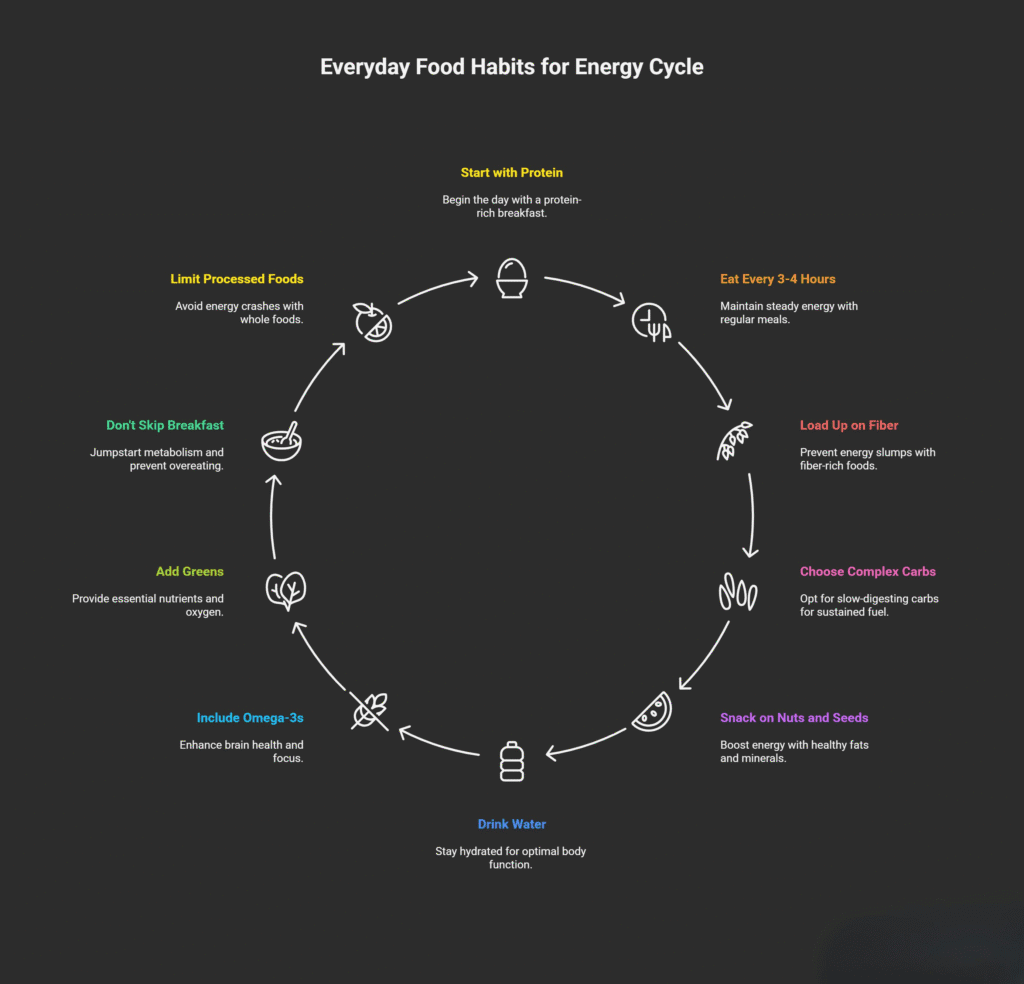
These aren’t complicated meal plans or expensive superfoods. They’re simple, doable habits that fit into your real life—and they actually work.
1. Start Your Morning With Protein
Skipping breakfast or grabbing a sugary pastry sets you up for an energy crash by mid-morning. A protein-rich breakfast does the opposite. Research shows that eating 20 to 40 grams of protein at breakfast increases satiety, improves concentration, and helps control blood sugar throughout the day.
Try scrambled eggs, Greek yogurt with nuts, or a smoothie with protein powder. Lauren Manaker, a registered dietitian nutritionist with over 20 years of experience and a master’s degree in clinical nutrition from Rush University, emphasizes the importance of protein for sustained energy and keeping muscles energized.
2. Eat Every 3 to 4 Hours
Going too long between meals tanks your blood sugar and leaves you feeling wiped out. Eating small, balanced meals or snacks every few hours keeps your energy steady. Think of your body like a wood-burning stove—you need to add logs regularly to keep the fire going.
Pack easy snacks like almonds, apple slices with peanut butter, or a hard-boiled egg.
3. Load Up on Fiber-Rich Foods
Fiber is your secret weapon against energy slumps. It slows digestion, prevents blood sugar spikes, and keeps you feeling full longer. Soluble fiber found in oats, beans, and apples forms a gel in your digestive system that regulates how quickly your body absorbs sugar.
Studies show that consuming 25 to 38 grams of fiber daily can reduce your risk of developing type 2 diabetes by 20 to 30 percent while improving insulin sensitivity and blood sugar control. Add berries to your breakfast, snack on carrots and hummus, or swap white rice for quinoa.
4. Choose Complex Carbs Over Simple Sugars
Not all carbs are created equal. Simple carbs (like white bread, candy, and soda) digest fast and cause energy crashes. Complex carbs (like whole grains, sweet potatoes, and legumes) break down slowly, giving you hours of sustained fuel.
Dr. Rahnama recommends complex carbohydrates such as wheat bread, oatmeal, pumpkin seeds, and chickpeas for steady energy release. Brown rice keeps its fiber-rich husk, which slows digestion and prevents the spike-and-crash cycle you get from white rice.
5. Snack on Nuts and Seeds
A handful of almonds, walnuts, or cashews can turn your energy around in minutes. Nuts pack protein, healthy fats, and magnesium—a mineral that helps your body convert food into energy. Just one ounce of almonds provides about 24 percent of your daily magnesium requirement.
Chia seeds are another powerhouse. When soaked, they form a gel that slows digestion and provides lasting fuel. Toss them into smoothies or make chia pudding for a filling snack.
6. Drink Water Throughout the Day
Even mild dehydration makes you feel tired, foggy, and sluggish. Most people mistake dehydration for fatigue. Water supports digestion, circulation, and brain function—all essential for energy.
Manaker stresses the importance of drinking enough water to keep muscles energized and prevent feelings of sluggishness. Aim for 8 to 10 glasses daily, and keep a water bottle with you as a reminder. If plain water bores you, add lemon or cucumber slices for flavor.
7. Include Omega-3 Rich Foods
Fatty fish like salmon, sardines, and trout contain omega-3 fatty acids (especially DHA) that boost brain health, focus, and mental clarity. These healthy fats reduce inflammation in the brain and protect against cognitive decline.
Research shows that ingestion of omega-3 fatty acids increases learning, memory, cognitive well-being, and blood flow in the brain. If you’re not a fish fan, try walnuts, flaxseeds, or avocados.
8. Add Dark Leafy Greens to Meals
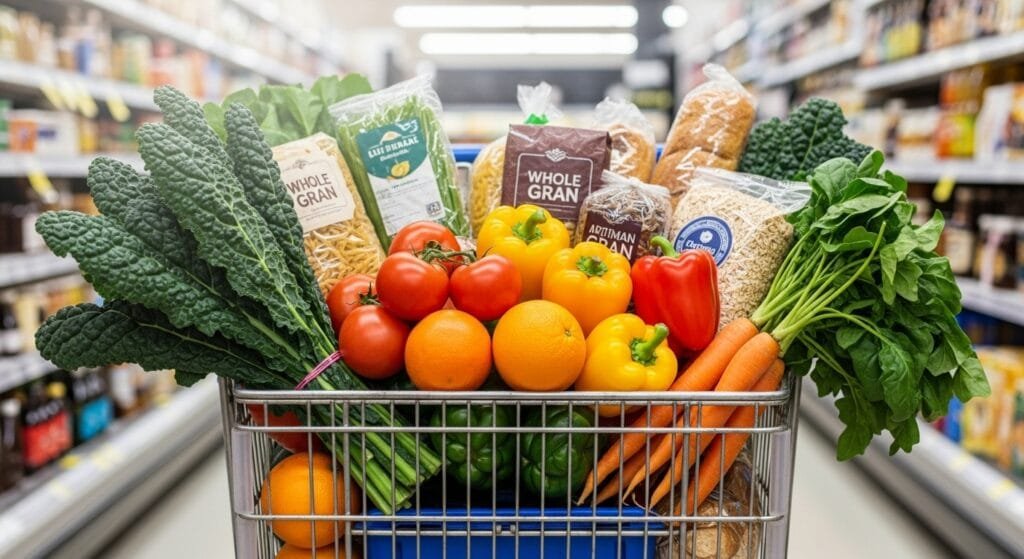
Greens like spinach, kale, and arugula are packed with fiber, iron, magnesium, and antioxidants. Iron helps deliver oxygen to your cells, which fights fatigue (especially if you have low iron levels). Arugula is rich in nitrate, which can improve oxygen delivery and boost endurance energy.
Toss greens into smoothies, make a massaged kale salad, or sauté them with garlic and olive oil.
9. Don’t Skip Breakfast
Breakfast skipping is closely associated with overeating (especially in the evening), weight gain, and obesity. When you skip breakfast, you’re more likely to feel ravenous later and make poor food choices. Eating a balanced breakfast jumpstarts your metabolism and sets the tone for steady energy all day.
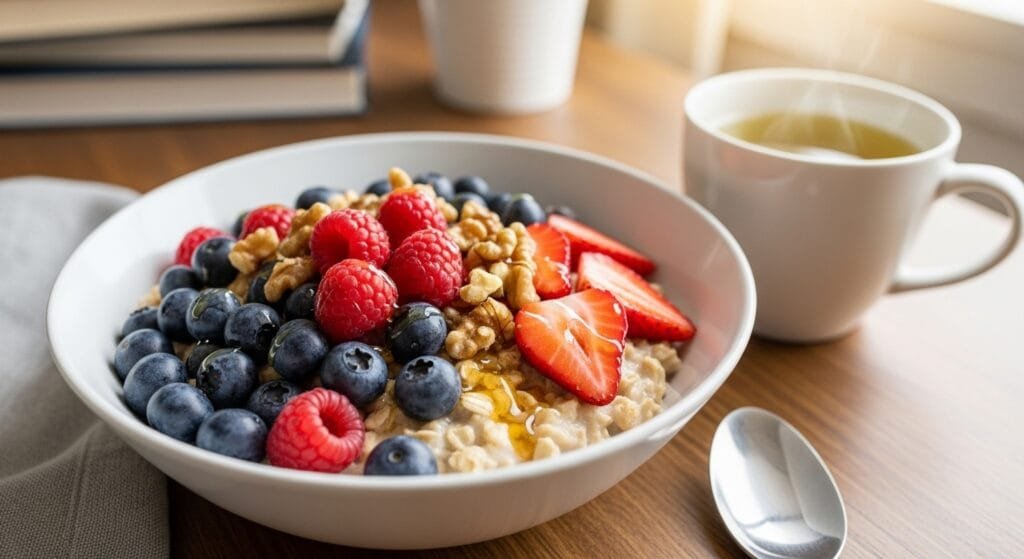
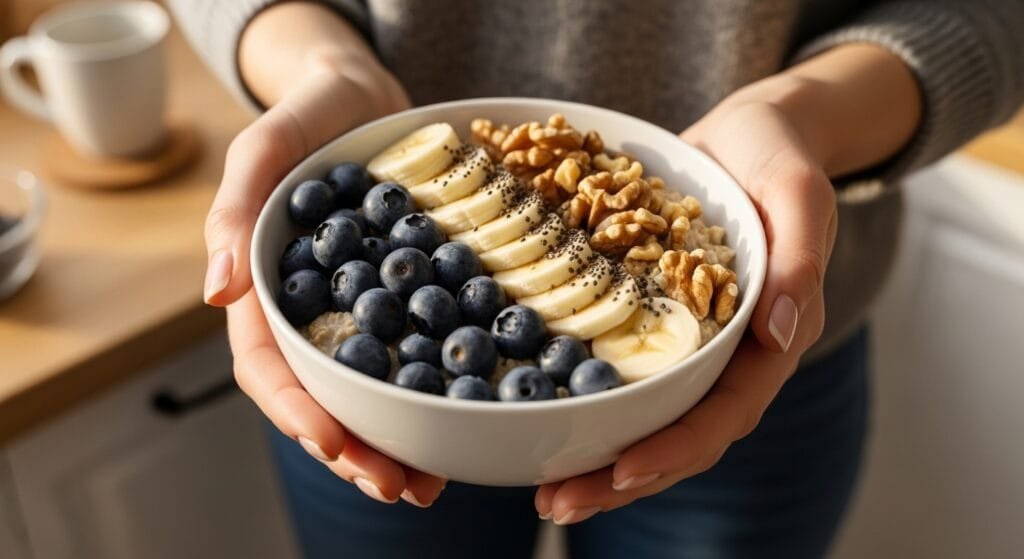
A bowl of whole-grain oatmeal with fruit and nuts, or eggs with whole-wheat toast, gives your body the fuel it needs to function.
10. Limit Processed Foods and Added Sugars
Processed foods and sugary snacks might taste good in the moment, but they wreck your energy. They cause blood sugar to spike quickly, followed by a sharp crash that leaves you more tired than before. These foods also lack the nutrients your body needs to produce energy efficiently.
Swap candy for fresh fruit, choose whole grains over refined grains, and read labels to avoid hidden sugars.
How These Habits Compare to Caffeine
| Energy Source | How It Works | Duration | Side Effects |
|---|---|---|---|
| Caffeine (Coffee) | Blocks adenosine receptors; temporarily masks fatigue | 1–2 hours | Jitters, crashes, sleep disruption, dependency |
| Protein-Rich Foods | Slow digestion; steady glucose release; increases satiety | 3–5 hours | None when consumed in balance |
| Complex Carbs | Gradual breakdown; sustained energy; fiber slows absorption | 3–4 hours | None; supports digestive health |
| Omega-3 Fats | Enhances brain function; reduces inflammation; improves focus | Ongoing (cumulative) | None; benefits increase over time |
| Hydration (Water) | Supports circulation, digestion, brain function | Ongoing | None; prevents fatigue from dehydration |
The Science Behind Food and Energy
Your body’s energy production depends on several key nutrients working together. B vitamins help convert food into fuel. Magnesium supports over 300 enzymatic reactions, including energy production. Iron delivers oxygen to cells, preventing fatigue.
When you eat fiber-rich foods, your gut bacteria ferment the fiber and produce short-chain fatty acids (SCFAs). These SCFAs enhance insulin sensitivity, promote leptin release (which reduces appetite), and support better glucose uptake—lowering blood sugar levels after meals.
Dr. Uma Naidoo, a Harvard-trained nutritional psychiatrist, professional chef, and Director of Nutritional and Lifestyle Psychiatry at Massachusetts General Hospital, explains that what we eat directly impacts our emotions because our gut and brain are connected. When we eat unhealthy food, inflammation in the gut leads to problems in the brain, affecting mood and energy.
Foods That Naturally Boost Energy
Here’s a quick reference list of energy-boosting foods you can start eating today:
- Bananas: Natural sugars, fiber, and potassium for quick, sustained energy
- Oats: Complex carbs and B vitamins for slow-releasing fuel
- Eggs: Complete protein and B12 for muscle energy and brain function
- Sweet Potatoes: Healthy carbs, fiber, and vitamin A for lasting energy
- Greek Yogurt: High protein and probiotics for gut health and satiety
- Almonds: Protein, healthy fats, and magnesium for energy production
- Lentils: Iron, fiber, and slow-digesting carbs for fullness and oxygen delivery
- Berries: Antioxidants and anthocyanins to balance energy and improve insulin sensitivity
- Dark Chocolate: Small amounts of natural stimulants (theobromine) plus antioxidants for brain function
- Quinoa: Complete plant protein and balanced carbs for stable blood sugar
Expert Tips for Maximum Energy
Beyond what you eat, how you eat matters too. Here are some expert-backed strategies to amplify your energy naturally:
Eat mindfully: Slow down and chew thoroughly. This aids digestion and helps your body absorb nutrients more efficiently.
Time your meals: Front-load your calories earlier in the day. A bigger breakfast and moderate lunch can prevent evening energy crashes and overeating.
Stay active: Short walks or stretch breaks between meals improve circulation and oxygen flow. Movement actually creates energy rather than depleting it.
Prioritize sleep: Even the best eating habits can’t overcome chronic sleep deprivation. Aim for 7 to 8 hours per night to support metabolic health.
Combine macronutrients: Pair carbs with protein or healthy fat (like apple slices with peanut butter) to slow sugar absorption and extend energy.
Common Energy-Draining Mistakes to Avoid
Even with good intentions, some habits can sabotage your energy. Watch out for these common pitfalls:
Relying on sugar for a quick fix: That candy bar or soda might perk you up temporarily, but the crash that follows will leave you worse off.
Skipping meals to save time: This backfires by slowing your metabolism and causing blood sugar dips that trigger fatigue and poor decision-making.
Drinking too much caffeine: More than 2 to 3 cups of coffee daily can disrupt sleep, increase anxiety, and create dependency.
Eating while distracted: Scrolling through your phone or working while eating prevents mindful eating and can lead to overeating and digestive issues.
Not drinking enough water: By the time you feel thirsty, you’re already mildly dehydrated—and that affects your energy and focus.
Putting It All Together: Your Daily Energy Plan
Here’s what a day of energy-boosting eating might look like:
Morning (7:00 AM): Start with a glass of water, then eat scrambled eggs with spinach and whole-wheat toast. Add a side of berries for antioxidants.
Mid-Morning (10:00 AM): Snack on Greek yogurt with a handful of almonds and a drizzle of honey.
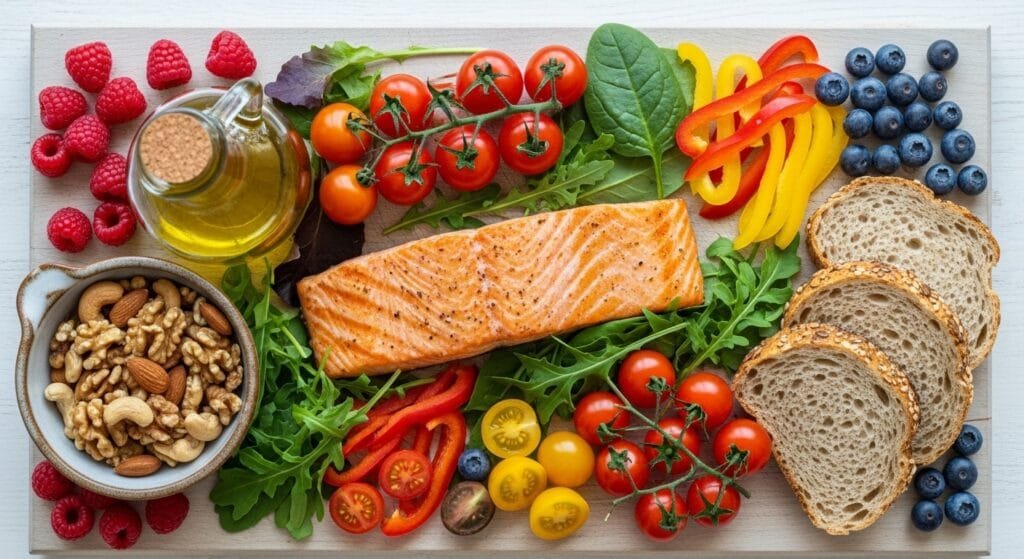
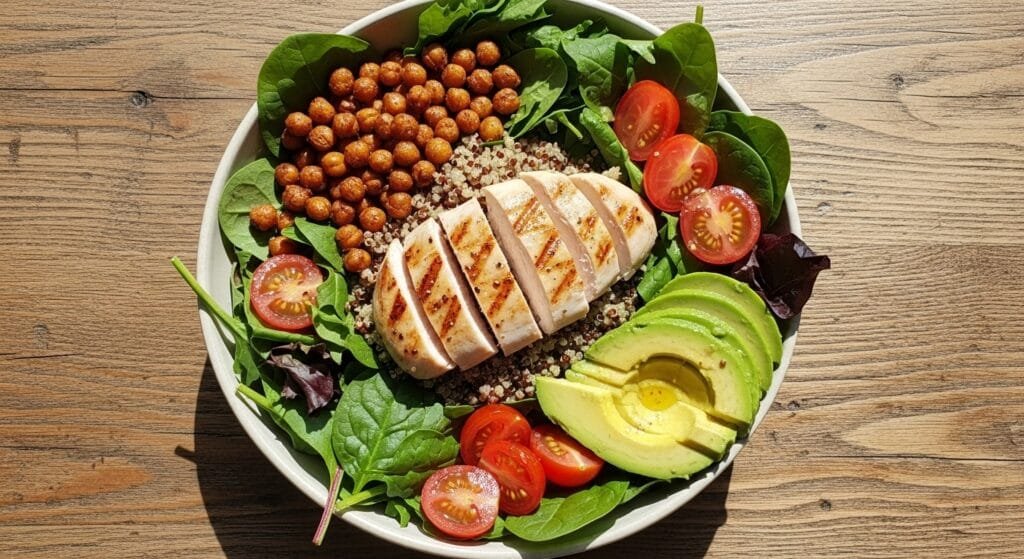
Lunch (12:30 PM): Enjoy a quinoa bowl with grilled salmon, mixed greens, cherry tomatoes, and avocado. Drink a full glass of water with your meal.
Afternoon (3:30 PM): Grab an apple with peanut butter or a small handful of walnuts.
Dinner (6:30 PM): Have baked sweet potato with lentil soup and a side salad. Keep portions moderate to avoid evening sluggishness.
Evening (if needed): If you’re genuinely hungry before bed, have a small snack like a few whole-grain crackers with hummus.
The Long-Term Benefits
When you consistently practice these everyday food habits for energy, the benefits go far beyond just feeling more awake. You’ll likely notice improved mood, better focus, more stable weight, reduced inflammation, and a lower risk of chronic diseases like type 2 diabetes and heart disease.
Research shows that well-hydrated people who eat balanced diets rich in fruits, vegetables, whole grains, and lean proteins are less likely to develop high blood sugar and diabetes. These habits also support gut health, which influences everything from immune function to mental well-being.
The best part? You don’t need to overhaul your entire life overnight. Start with one or two habits—maybe adding protein to breakfast or drinking more water—and build from there. Small, consistent changes add up to big results over time.
You’ve got this. Your body knows how to create energy naturally when you give it the right fuel at the right times. So the next time you feel that afternoon slump coming on, skip the coffee and reach for a handful of nuts, a piece of fruit, or a big glass of water instead. Your energy levels—and your whole body—will thank you.
This article is part of our 7 Healthy Daily Lifestyle Choices That Transform Your Well-Being pillar guide, where we explore practical, science-backed habits that improve energy, sleep, focus, and overall well-being in everyday life.
My Experience & Insights
While researching natural ways to boost energy without caffeine for this article, I realized just how much misinformation exists about what actually works versus what’s just marketing hype. I’ve spent the last few months digging deep into the science, testing different approaches on myself, and talking with readers about their experiences.
What surprised me most was discovering how long caffeine actually stays in your system. The half-life ranges from 3 to 7 hours for most people, meaning it takes that long for your body to eliminate just half of what you consumed. For slow metabolizers, it can take up to 9.5 hours to clear half the caffeine. That’s why people who drink coffee after 2 PM often struggle with sleep—even if they don’t feel “wired,” the caffeine is still affecting their brain chemistry.
I used to be one of those three-cups-a-day people. My mornings started with coffee, I’d have another around 11 AM, and by 3 PM I was reaching for a third just to push through the afternoon slump. The problem? I’d crash around 4:30 PM, struggle to focus in the evenings, and then couldn’t fall asleep until midnight. It was a vicious cycle.
When I started experimenting with food-based energy instead, I was skeptical. How could eating eggs and oatmeal compete with the jolt of espresso? But the research kept pointing to the same conclusion: protein-rich breakfasts provide sustained fullness and stable energy for 3 to 5 hours without any crash. One study found that consuming 20 to 40 grams of protein at breakfast led to increased satiety and better blood sugar control for up to 4 hours after the meal.
So I tried it. I swapped my coffee-and-pastry routine for scrambled eggs with spinach, whole-wheat toast, and a handful of berries. The first few days were rough—I definitely missed that caffeine kick. But by day four, something changed. I made it to lunch without feeling hungry or foggy. I didn’t need a midday coffee. And when 3 PM rolled around, I wasn’t crashing.
The hydration piece was equally eye-opening. I never thought I was dehydrated—I drank coffee and tea all day, so I assumed I was getting enough fluids. But even mild dehydration of just 2% body weight loss can impair cognitive performance, slow reaction times by 12 to 18%, and cause fatigue and confusion. Research published in PLOS ONE found that increasing water intake in people who normally drank less significantly reduced fatigue, confusion, and thirst while improving overall mood.
I started keeping a water bottle on my desk and set reminders to drink throughout the day. Within a week, I noticed I felt clearer, less irritable, and more focused. My afternoon energy was steadier. I wasn’t relying on snacks or caffeine to get through the day.
Another discovery: timing matters more than I realized. Studies consistently show that consuming extra protein at breakfast—rather than at lunch or dinner—leads to greater and more sustained feelings of fullness during calorie restriction. It’s not just what you eat, but when you eat it.
I also learned that complex carbohydrates break down slowly, releasing glucose gradually over 3 to 4 hours. This prevents the spike-and-crash cycle you get from sugary snacks or even fruit juice on an empty stomach. Swapping white rice for quinoa, choosing sweet potatoes over regular fries, and reaching for whole-grain crackers instead of chips made a noticeable difference in how I felt throughout the day.
What I didn’t expect was how much better I’d sleep. Caffeine increases the caloric cost of activity by about 8%, meaning your body burns more calories doing the same work—but less efficiently. When I cut back to just one cup of coffee in the morning (and none after noon), I started falling asleep faster and waking up more refreshed. That alone gave me more natural energy than any amount of afternoon caffeine ever did.
Now, I’m not saying caffeine is evil or that you need to quit completely. But after months of testing food-based energy strategies, I can honestly say I feel better, sleep better, and have more consistent energy throughout the day than I did when I was relying on coffee. My focus is sharper, my mood is more stable, and I don’t have those brutal afternoon crashes anymore.
The biggest takeaway? Sustainable energy isn’t about stimulants or quick fixes. It’s about understanding how your body processes different fuel sources and making small, consistent choices that support steady performance all day long. Once I figured that out, everything else fell into place.
Frequently Asked Questions
What foods give you energy without caffeine?
Foods that provide natural, sustained energy without caffeine include protein-rich options like eggs, Greek yogurt, and nuts, complex carbohydrates such as oatmeal, quinoa, and sweet potatoes, and healthy fats from salmon, avocados, and almonds. These foods release energy slowly, preventing the crashes associated with caffeine. Dark leafy greens like spinach and kale provide iron and magnesium to support oxygen delivery and energy production, while staying properly hydrated with water throughout the day prevents fatigue and maintains focus.
How can I boost my energy naturally in the afternoon?
To boost energy naturally in the afternoon without caffeine, eat a balanced snack combining protein and complex carbs, such as apple slices with almond butter, Greek yogurt with berries, or hummus with whole-grain crackers. Drink a full glass of water, as mild dehydration causes afternoon fatigue. Take a 5-10 minute walk to increase blood flow and oxygen to your brain. Avoid sugary snacks that cause blood sugar spikes and crashes. If possible, step outside for natural sunlight exposure, which helps regulate your circadian rhythm and increases alertness.
What should I eat for breakfast to have energy all day?
For all-day energy, eat a breakfast containing 20-40 grams of protein, complex carbohydrates, and healthy fats. Examples include scrambled eggs with whole-wheat toast and avocado, Greek yogurt with berries and almonds, or oatmeal topped with walnuts and banana. Protein-rich breakfasts increase satiety for 3-5 hours, stabilize blood sugar levels, and improve concentration throughout the day. Avoid sugary cereals, pastries, or juice-only breakfasts, which cause energy crashes within 1-2 hours. Eating breakfast within 1-2 hours of waking jumpstarts your metabolism and sets the foundation for steady energy.
How long does it take for food to give you energy?
Simple carbohydrates like fruit or white bread provide quick energy within 15-30 minutes but only last 1-2 hours. Complex carbohydrates combined with protein (such as whole-grain toast with peanut butter) take 30-60 minutes to digest and provide sustained energy for 3-5 hours. Protein-rich meals take longer to digest—typically 2-3 hours—but deliver steady, long-lasting fuel without crashes. For optimal energy throughout the day, eat balanced meals every 3-4 hours combining protein, complex carbs, and healthy fats rather than relying on quick-fix snacks.
Can drinking water really increase energy levels?
Yes, drinking water significantly increases energy levels. Even mild dehydration of just 2% body weight loss impairs cognitive performance, slows reaction times by 12-18%, and causes fatigue, confusion, and difficulty concentrating. Water supports essential energy-related functions including nutrient transport, oxygen delivery to cells, digestion, and brain function. Research shows that people who increase their daily water intake experience reduced fatigue, improved mood, and better focus. Aim for 8-10 glasses (64-80 ounces) daily, and drink consistently throughout the day rather than waiting until you feel thirsty, which indicates you’re already mildly dehydrated.
What’s better for energy: caffeine or food?
Food provides better sustained energy than caffeine for most people. Caffeine offers quick alertness within 15-30 minutes but only lasts 1-2 hours, often followed by jitters, anxiety, and crashes. Caffeine has a half-life of 3-7 hours, meaning it can disrupt sleep even when consumed early in the day. In contrast, balanced meals with protein, complex carbs, and healthy fats provide steady energy for 3-5 hours without side effects or crashes. Food also delivers essential nutrients (vitamins, minerals, antioxidants) that support long-term energy production, while caffeine only masks fatigue temporarily. For optimal results, combine good eating habits with hydration and limit caffeine to 1-2 cups before noon.
💊 Do not rely solely on online content for diagnosis or treatment.
📜 Information here is provided “as is” without any warranties.