
💊 Do not rely solely on online content for diagnosis or treatment.
📜 Information here is provided “as is” without any warranties.
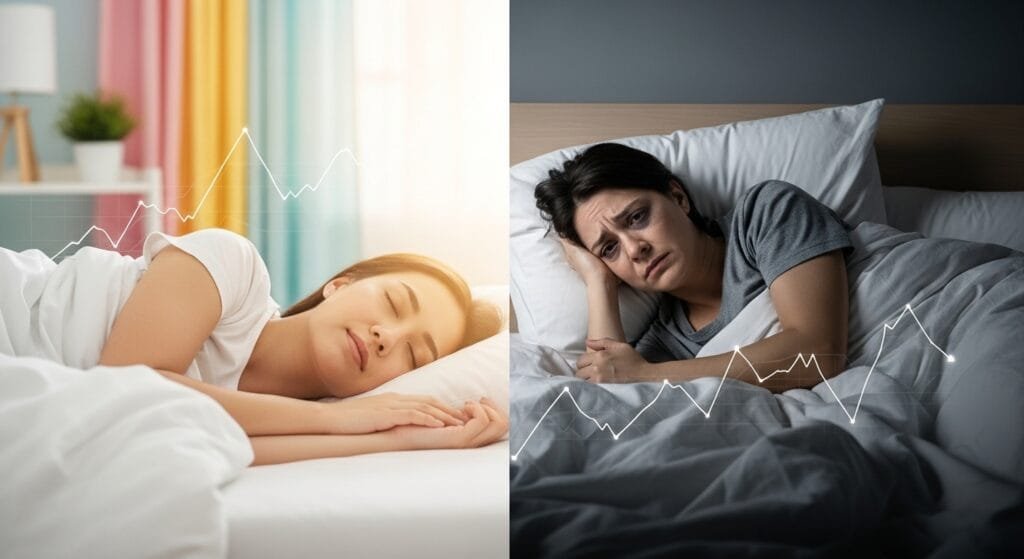
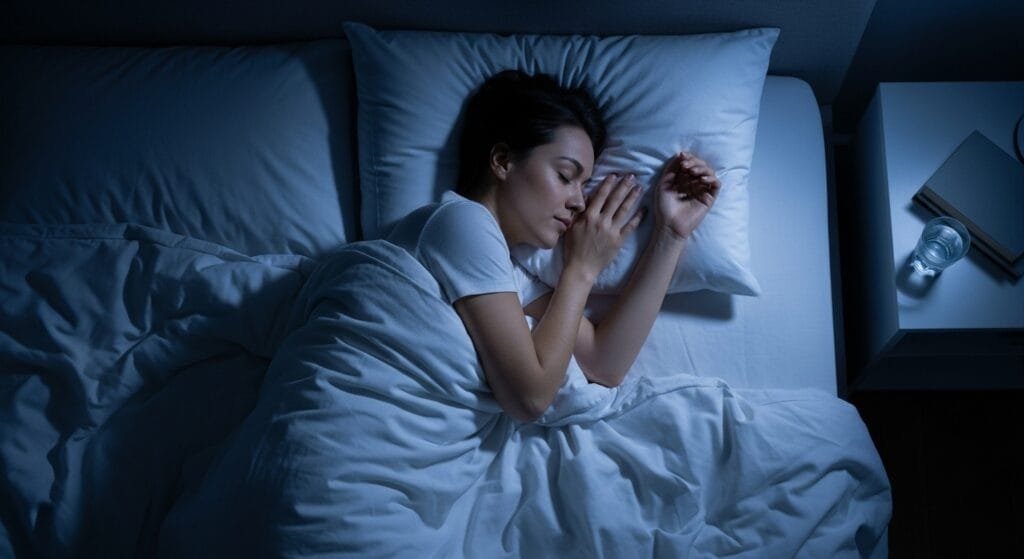
If you’re struggling with sleep, you’re not alone—and sleep hygiene tips for better sleep tonight can transform how you rest starting right now. Poor sleep affects millions of Americans, but small changes to your bedroom and bedtime habits can make a dramatic difference in how quickly you fall asleep and how deeply you rest.
Sleep hygiene refers to the environmental and behavioral factors that influence your sleep quality. Research consistently shows that optimizing these factors leads to faster sleep onset, longer sleep duration, and more restorative rest. The good news? You don’t need expensive gadgets or prescriptions—just simple, science-backed adjustments you can implement tonight.
- Why Sleep Hygiene Matters
- Sleep Hygiene Tips for Better Sleep Tonight
- Cool Down Your Room
- Cut Caffeine Six Hours Before Bed
- Block Blue Light Two Hours Before Bed
- Stick to a Consistent Sleep Schedule
- Create a Dark, Quiet Sleep Environment
- Time Your Exercise Wisely
- Develop a Calming Pre-Bed Routine
- Quick Comparison: Good vs. Poor Sleep Hygiene
- My Experience & Insights
- Start Tonight
- Sleep Environment Grader
- Your Sleep Environment Score
- Frequently Asked Questions
Why Sleep Hygiene Matters
Your body runs on a 24-hour internal clock called your circadian rhythm, which regulates when you feel awake and when you feel sleepy. This rhythm responds to external cues like light, temperature, and your daily habits. When these cues are inconsistent or work against your natural biology, your sleep suffers.
Dr. Matthew Walker, Professor of Neuroscience and Psychology at the University of California, Berkeley and Founder of the Center for Human Sleep Science, has spent decades researching sleep’s impact on human health. His work shows that quality sleep affects everything from memory and mood to immune function and disease risk.
Recent studies reveal just how sensitive your sleep is to environmental factors. Research shows that reduced sleep efficiency is directly related to air quality, temperature levels, and noise. Temperature fluctuations as small as 0.2°C can moderately disturb sleep, while shifts exceeding 60% from your typical sleep temperature can drop sleep efficiency below 50%.
Sleep Hygiene Tips for Better Sleep Tonight
Cool Down Your Room
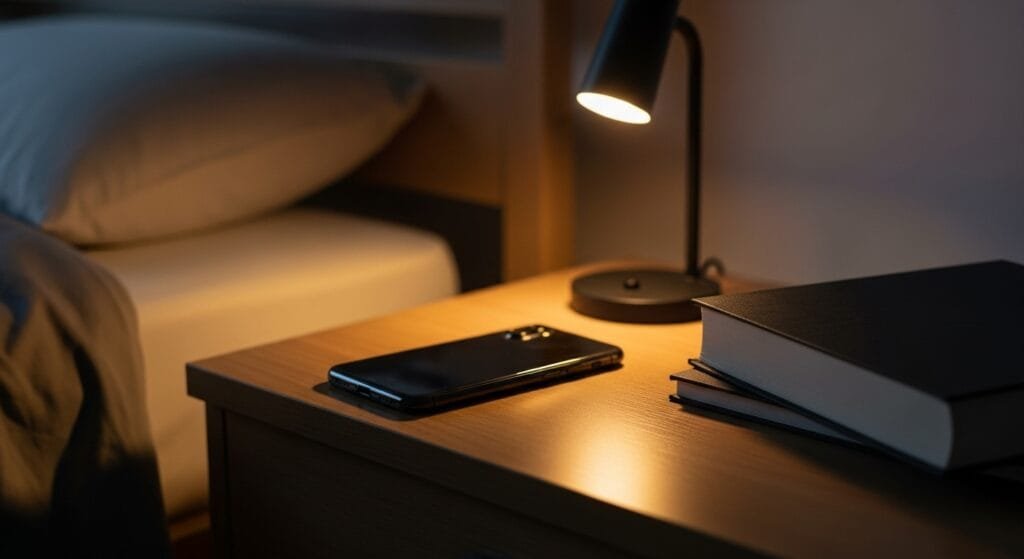
Your bedroom temperature plays a huge role in sleep quality. The ideal sleeping temperature falls between 65 to 68 degrees Fahrenheit (18.3 to 20 degrees Celsius). This might feel cooler than you’re used to, but there’s solid science behind it.
Your core body temperature naturally drops as you prepare for sleep—it’s one of the signals that tells your brain it’s time to rest. A cooler room supports this natural process and makes it easier to fall asleep and stay asleep throughout the night.
Dr. Michael Breus, PhD, a clinical psychologist and Diplomate of the American Board of Sleep Medicine, explains that cooling your bedroom significantly improves sleep quality. After treating thousands of patients over 26 years as a sleep specialist, he emphasizes temperature control as one of the most effective sleep interventions.
If you don’t have air conditioning, try opening windows in the evening, using a fan, or investing in breathable bedding materials like cotton or bamboo sheets.
Cut Caffeine Six Hours Before Bed
That afternoon coffee might be sabotaging your sleep more than you realize. Caffeine blocks adenosine, a chemical that makes you feel sleepy, and its effects last much longer than most people think.
A landmark study published in the Journal of Clinical Sleep Medicine found that caffeine consumed even six hours before bedtime reduced total sleep time by 41 minutes. The research showed that caffeine taken at bedtime, three hours before bed, or six hours before bed all significantly disrupted sleep compared to placebo.
A systematic review found that caffeine consumption reduced total sleep time by 45 minutes on average, decreased sleep efficiency by 7%, and increased the time it took to fall asleep by nine minutes. It also reduced deep sleep duration by over 11 minutes—the stage of sleep most important for physical recovery and feeling refreshed.
For better sleep tonight, avoid caffeine after 2 PM if you typically go to bed around 8 or 9 PM. This gives your body enough time to metabolize the caffeine before sleep.
Block Blue Light Two Hours Before Bed
Your phone, tablet, computer, and TV emit blue light—a specific wavelength that powerfully suppresses melatonin, the hormone that signals your body it’s time to sleep.
Harvard researchers found that blue light suppresses melatonin for about twice as long as green light and shifts circadian rhythms by twice as much—three hours versus 1.5 hours. A systematic review showed that just two hours of blue light exposure at 460 nm in the evening significantly suppressed melatonin levels.
Blue light tricks your brain into thinking it’s still daytime, delaying melatonin release and disrupting your natural sleep-wake cycle. This is why scrolling through your phone in bed makes it harder to fall asleep, even when you’re exhausted.
To protect your sleep, turn off screens at least two hours before bedtime. If that’s not possible, use blue light blocking glasses, enable your device’s night mode (which shifts the screen to warmer colors), or install apps that filter blue light in the evening hours.
Stick to a Consistent Sleep Schedule
Going to bed and waking up at the same time every day—yes, even on weekends—is one of the most powerful sleep hygiene practices you can adopt.
A study tracking 61 college students for 30 days found that irregular sleep schedules were associated with delayed circadian rhythms equivalent to traveling two to three time zones westward. Students with irregular sleep patterns also showed lower academic performance compared to those with consistent schedules.
Research published in 2024 demonstrated that sleep regularity—the day-to-day consistency of sleep-wake timing—is actually a stronger predictor of mortality risk than sleep duration. Regular sleep patterns support your circadian rhythm, making it easier to fall asleep naturally and wake up feeling refreshed.
Dr. Phyllis C. Zee, Professor of Neurology and Director of the Center for Circadian and Sleep Medicine at Northwestern University, has published over 300 peer-reviewed articles on sleep and circadian rhythms. Her research emphasizes the critical role of circadian-sleep interactions in cardiometabolic and neurologic health.
Set a target bedtime and wake time, then stick to it within 30 minutes every day. Your body will adapt, and falling asleep will become easier over time.
Create a Dark, Quiet Sleep Environment
Light and noise are two major sleep disruptors that many people overlook. Even small amounts of light can signal your brain to stay alert, while noise fragments your sleep structure by causing awakenings and shifts to lighter, less restorative sleep stages.
Studies consistently show that exposure to light in the evening makes it more challenging to fall asleep. Your bedroom should be as dark as possible—consider room-darkening shades, blackout curtains, or a comfortable sleep mask.
For noise, earplugs can be remarkably effective. If you prefer ambient sound, a white noise machine or fan can mask disruptive sounds like traffic, neighbors, or a snoring partner. Research shows that environmental interventions to reduce sound and light exposure improve patient sleep quality.
A 2024 survey found that 63% of travelers report worse sleep while away from home, with noise (75%), lighting (72%), and bedding (70%) as the top disruptors. Treating your bedroom like a sleep sanctuary can make all the difference.
Time Your Exercise Wisely
Regular physical activity improves sleep quality, but timing matters. Most experts recommend getting at least 150 minutes of moderate exercise per week, split into 30-minute sessions five days a week.
Morning exercise appears particularly beneficial for sleep. A study of university students found that those exercising in the morning experienced better sleep quality (71.4%) compared to those exercising in the evening (44.1%). Morning exercisers also showed increased nighttime melatonin levels and decreased body temperature—both factors that promote quality sleep.
The good news? Recent research shows that evening exercise doesn’t necessarily harm sleep as once believed. A 2023 systematic review found that short-term evening exercise and high-intensity exercise did not significantly reduce sleep quality, though they may delay melatonin rhythm and increase core body temperature temporarily.
If you exercise in the evening, finish at least three to four hours before bedtime to give your body temperature and heart rate time to return to baseline. For people with insomnia, sticking to light or moderate exercise at least four hours before bed is the safest approach.
Develop a Calming Pre-Bed Routine
Your bedtime routine sends powerful signals to your brain about whether it’s time to wind down or stay alert. A consistent 30 to 60-minute routine helps transition your body from the day’s activities to sleep mode.
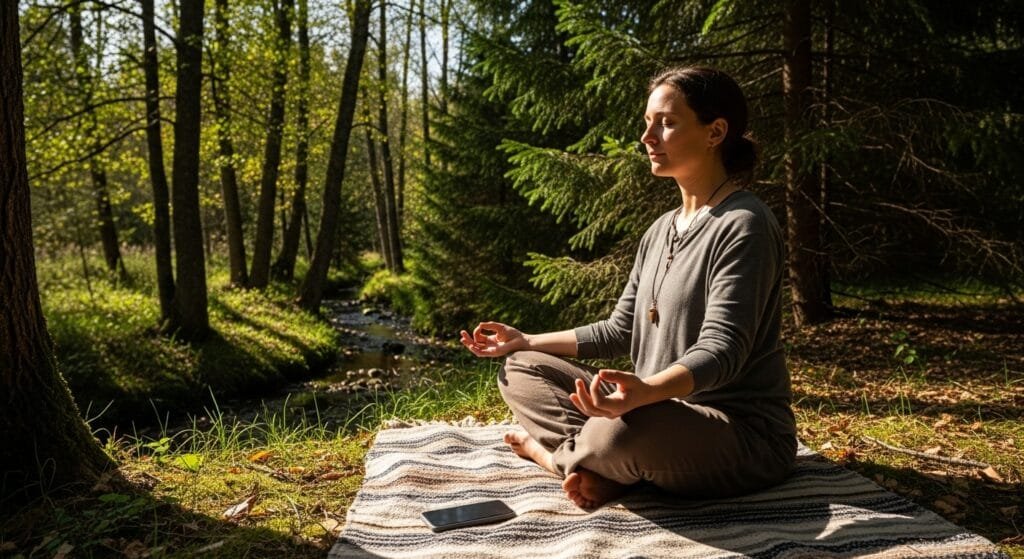
Effective pre-bed activities include taking a warm bath, reading a physical book (not on a screen), practicing gentle stretching, doing light yoga, or using relaxation techniques like deep breathing or meditation. The key is consistency—doing the same relaxing activities in the same order every night trains your brain to recognize it’s time for sleep.
Avoid heavy meals, intense discussions, work emails, and stimulating activities in the hours before bed. Also skip alcohol close to bedtime—while it may make you feel sleepy initially, it disrupts sleep quality later in the night.
Quick Comparison: Good vs. Poor Sleep Hygiene
| Sleep Factor | Good Sleep Hygiene | Poor Sleep Hygiene |
|---|---|---|
| Room Temperature | 65-68°F (18-20°C) | Above 70°F or highly variable |
| Caffeine Cutoff | No caffeine after 2 PM | Coffee or energy drinks in evening |
| Screen Time | Devices off 2 hours before bed | Scrolling phone/watching TV in bed |
| Sleep Schedule | Same bedtime/wake time daily | Irregular sleep-wake times |
| Bedroom Light | Dark room with blackout curtains | Light from windows, electronics, hallways |
| Evening Exercise | Finish 3-4 hours before bed | Intense workouts right before bed |
| Pre-Bed Routine | Relaxing activities for 30-60 min | Stimulating activities until bedtime |
This article is part of our 7 Healthy Daily Lifestyle Choices That Transform Your Well-Being pillar guide, where we explore practical, science-backed habits that improve energy, sleep, focus, and overall well-being in everyday life.
My Experience & Insights
As someone who’s spent years researching wellness habits and building tools to help people improve their health, I’ve seen firsthand how transformative good sleep hygiene can be. The beauty of these strategies is their simplicity—you don’t need special equipment or supplements to see results.
What surprises most people is how much temperature matters. When I started keeping my bedroom at 67°F instead of my usual 72°F, I noticed I fell asleep faster and woke up less during the night. It felt uncomfortably cold at first, but within a few nights, I was sleeping better than I had in months.
The caffeine timing revelation was equally eye-opening. I used to drink coffee until 4 PM, thinking it was fine since I didn’t go to bed until 11 PM. Once I moved my caffeine cutoff to 2 PM, the difference was remarkable—I fell asleep 20 to 30 minutes faster on average.
I’ve also learned that consistency beats perfection. You don’t need to implement all seven strategies perfectly tonight. Start with two or three that seem most manageable, then gradually add others as they become habits. The cumulative effect of multiple small improvements is far greater than trying to overhaul everything at once and giving up.
One often-overlooked insight: your sleep environment affects your partner too. If you share a bed, you might need to compromise on temperature or invest in separate blankets with different warmth levels. Some couples have even embraced the “sleep divorce” trend—sleeping in separate rooms to prioritize individual sleep quality—and report better relationships as a result.
Start Tonight
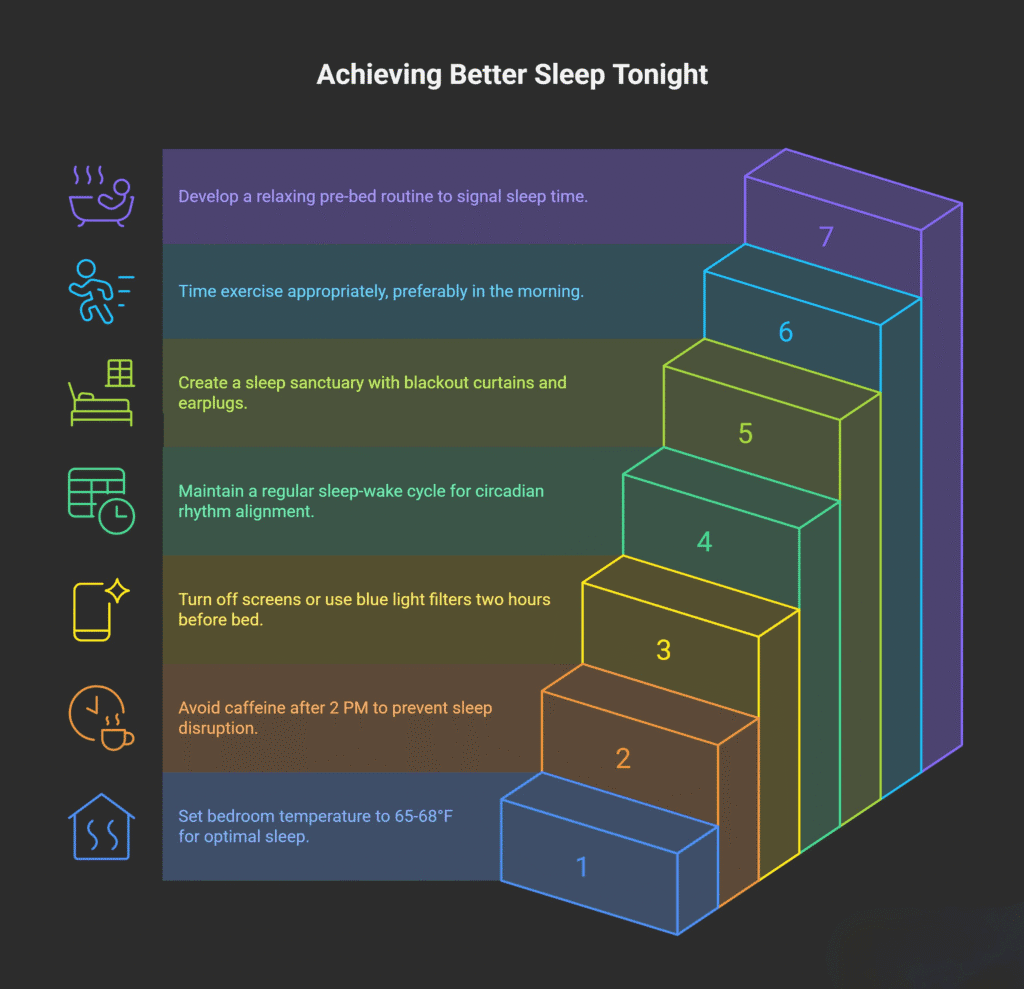
The most important thing to remember is that sleep hygiene isn’t about rigid rules—it’s about creating conditions that work with your body’s natural biology. Your circadian rhythm, temperature regulation, and hormone production all follow predictable patterns. When you align your environment and habits with these patterns, sleep becomes easier and more restorative.
Pick one or two changes from this list and implement them tonight. Maybe it’s setting your thermostat to 67°F, putting your phone in another room at 9 PM, or committing to a consistent bedtime. Small adjustments compound over time, and within a week or two, you’ll likely notice you’re falling asleep faster, sleeping more soundly, and waking up more refreshed.
Quality sleep isn’t a luxury—it’s a biological necessity that affects your physical health, mental clarity, emotional resilience, and overall quality of life. You deserve to sleep well, and with these evidence-based strategies, you can start experiencing deeper, more restorative sleep tonight.
Sleep Environment Grader
Assess your bedroom setup and get personalized improvement tips
Your Sleep Environment Score
Personalized Recommendations
Frequently Asked Questions
How long does it take for sleep hygiene changes to work?
Most people start noticing improvements within 1-2 weeks of consistently practicing good sleep hygiene. However, some changes—like adjusting your room temperature or avoiding screens—can improve your sleep quality as soon as tonight. The key is consistency. Your body needs time to adjust its circadian rhythm and develop new sleep patterns. If you don’t see improvements after 3-4 weeks of consistent practice, consult a healthcare provider to rule out underlying sleep disorders.
Can I still drink coffee in the morning if I have trouble sleeping at night?
Yes, morning coffee is generally fine and won’t affect your nighttime sleep. The issue is timing—caffeine has a half-life of about 5-6 hours, meaning half of it is still in your system hours after drinking it. Research shows that caffeine consumed even six hours before bedtime can reduce total sleep time by 41 minutes. Stick to having your last cup of coffee before 2 PM if you typically go to bed around 8-9 PM. This gives your body enough time to metabolize the caffeine completely before sleep.
Is it bad to exercise at night if that’s my only free time?
Evening exercise doesn’t necessarily ruin your sleep—recent studies show it can actually be beneficial for many people. A 2023 systematic review found that evening exercise didn’t significantly reduce sleep quality for most individuals. The key is finishing your workout at least 3-4 hours before bedtime to allow your body temperature and heart rate to return to baseline. If you only have time to exercise at night, go for it—just avoid intense workouts within 2 hours of bedtime, and stick to moderate or light exercise instead.
What if my partner prefers a warmer bedroom temperature than I do?
This is a common issue, and there are practical solutions. The optimal sleep temperature is 65-68°F, but individual preferences vary. Try setting the room to 67°F and using separate blankets—a lighter one for the person who gets hot and a heavier duvet for the person who gets cold. You can also use a fan on one side of the bed, invest in cooling or warming mattress pads for each side, or consider breathable pajamas. Some couples even sleep in separate rooms to prioritize sleep quality, which studies show can actually improve relationship satisfaction.
Do I need to follow all these sleep hygiene rules perfectly to see results?
Absolutely not—perfection isn’t the goal. Start by choosing 2-3 changes that feel most manageable for your lifestyle. For example, you might begin with adjusting your room temperature, cutting off caffeine by 2 PM, and putting your phone away an hour before bed. Once these become habits, gradually add more practices. Research shows that sleep schedule consistency alone is one of the most powerful interventions. Small, consistent improvements compound over time and are far more effective than trying to overhaul everything at once and burning out.
Will good sleep hygiene cure my insomnia or sleep disorder?
Sleep hygiene is an important foundation, but it may not cure chronic insomnia or diagnosed sleep disorders like sleep apnea, restless legs syndrome, or narcolepsy. These conditions often require medical intervention, such as cognitive behavioral therapy for insomnia (CBT-I), medication, or other treatments prescribed by a sleep specialist. Think of sleep hygiene as the essential first step—it creates optimal conditions for sleep and can significantly improve mild to moderate sleep problems. If you’ve consistently practiced good sleep hygiene for 4-6 weeks and still struggle with sleep, consult a healthcare provider or board-certified sleep specialist for a comprehensive evaluation.
💊 Do not rely solely on online content for diagnosis or treatment.
📜 Information here is provided “as is” without any warranties.