


💊 Do not rely solely on online content for diagnosis or treatment.
📜 Information here is provided “as is” without any warranties.
How do you start building daily rituals that stick plan—without giving up a week later? I used to wrestle with routines, so I dug into the science and reached out to top experts. Here’s a streamlined, down-to-earth approach for anyone wanting real, lasting change.
- Why Rituals Make Our Days Better
- Building Daily Rituals That Stick Plan: The 4-Step Method
- What’s the Difference? Rituals, Routines, or Habits? (Let’s Compare)
- Habit vs Routine vs Ritual
- What Science and Experts Are Saying
- Picking a Ritual That Fits
- Pitfalls to Watch For (and Simple Fixes)
- Real Example: My 7-Minute Reset
- Why Rituals Boost Your Mindset
- Wrapping Up: How to Make It Stick
- My Experience & Insights
- Ritual Difficulty Grader
- Frequently Asked Questions
Why Rituals Make Our Days Better

Ever notice how a rushed morning can throw off your whole day? Turns out, routines set the tone—and are way more powerful than willpower alone. According to a Wondermind guide to sticky routines featuring therapist Risa Williams, setting simple, meaningful habits rewires the brain.
Sleep scientist Dr. Grace Vincent reports that over 65% of our daily actions are automatic, based on habit instead of active decision-making, as seen in this News Medical analysis. In other words—rituals work even when motivation takes a day off.
Building Daily Rituals That Stick Plan: The 4-Step Method
1. Start Extra Small
It’s so tempting to overhaul everything at once, but starting smaller than you think pays off. Therapist Risa Williams recommends breaking new habits into “crushable” pieces—like just two minutes of journaling, or nudging bedtime ten minutes earlier. You’ll build up fast, but it feels effortless at first.
Best-selling author James Clear, creator of the “two-minute rule” from Atomic Habits, says this is key to turning actions into habits.
2. Anchor New Rituals to What You Already Do
Making new habits stick is easier when you tie them to a routine you already have. Behavioral scientist Dr. Benjamin Gardner discovered that repeating a task after a cue or anchor—like stretching as soon as you pour coffee—makes it automatic. Clear explains this “habit stacking”: simply add a new ritual onto something that’s already part of your day, like brushing your teeth or making breakfast.
3. Use Visuals and Rewards
According to mental health counselor Samantha Zhu, keeping your ritual visible (try a habit tracker or sticky notes) boosts the odds you’ll remember to actually do it. Watching your streak grow feels rewarding—and you can double up by pairing your new ritual with a tiny treat, like your favorite playlist. Check out the Calm guide to easy routines for more ideas.
4. Adjust and Celebrate (Even the Small Wins)
Not every ritual will fit perfectly right away, and that’s fine. Dr. Sachiko Tate, a licensed clinical social worker, stresses the importance of tweaking your routine until it fits your real life. Take time to notice any progress. Even small steps are worth celebrating—and reviewing your routines each week makes it more likely you’ll hang onto the ones that matter.
What’s the Difference? Rituals, Routines, or Habits? (Let’s Compare)
Habit vs Routine vs Ritual
| Habit | Routine | Ritual |
|---|---|---|
| An automatic action triggered by a cue, like brushing your teeth | A planned series of actions, like your warm-up before exercise | A routine with added meaning, like starting with gratitude |
| By repeating after cues and through rewards, as described by Dr. Gardner | By organizing several habits together | By infusing intention or symbolism |
| It feels automatic and easy—less mental work | Brings order and helps with predictability | Emotions boost commitment and enjoyment |
| Things you want to automate, like daily vitamins | Making your day smoother | Supporting goals and well-being |
Sources: Zapier’s take on morning routines, Gardner’s research on habit cues, Headspace on routines
What Science and Experts Are Saying
Did you know most of us already operate on auto-pilot for more than half our day? Dr. Grace Vincent uncovered this in her academic work. Psychologist Dr. Lisa Firestone notes that when we add an intentional ritual—like a bedtime gratitude list—it can lower stress and boost wellbeing.
James Clear sums it up like this: your goal isn’t just to “run a marathon,” it’s to “become a runner.” Lasting change means the habit becomes part of your identity.
Picking a Ritual That Fits
There’s no need to start big. Choose a ritual that’s both simple and meaningful for you. Dr. Williams recommends anchoring it to a real part of your routine—like a “cup of tea and stretch” after work, or reading ten minutes before bed. Make it concrete and doable, not wishful thinking.
Pitfalls to Watch For (and Simple Fixes)
- Trying to change everything at once? Just start with one ritual.
- If you’re dreading it, change the ritual—it needs to fit you, not the other way around.
- Rituals work best with a reminder or “anchor.” A sticky note, water bottle, or calendar ping can help.
Dr. Gardner’s research found that sticking rituals to cues and rewarding them helps people keep at it, even on low-motivation days.
Real Example: My 7-Minute Reset
I used to hate mornings. But after pairing two minutes of stretching with brewing coffee—and giving myself a cheesy gold-star on a habit tracker—I actually started to look forward to this new ritual. That tiny shift made the rest of my morning feel less rushed and more in control.
You can do this too: anchor one new action to something you already do, keep it tiny, and let success build.
Why Rituals Boost Your Mindset
Daily routines, even short ones, mean less stress and more focus. Dr. Firestone says simple rituals help ground us, especially during busy or anxious times. Positive psychology expert Dr. Sriram Rajagopalan found that rituals like setting intentions and daily affirmations help us keep promises to ourselves and boost confidence (Psychology Today).
Wrapping Up: How to Make It Stick
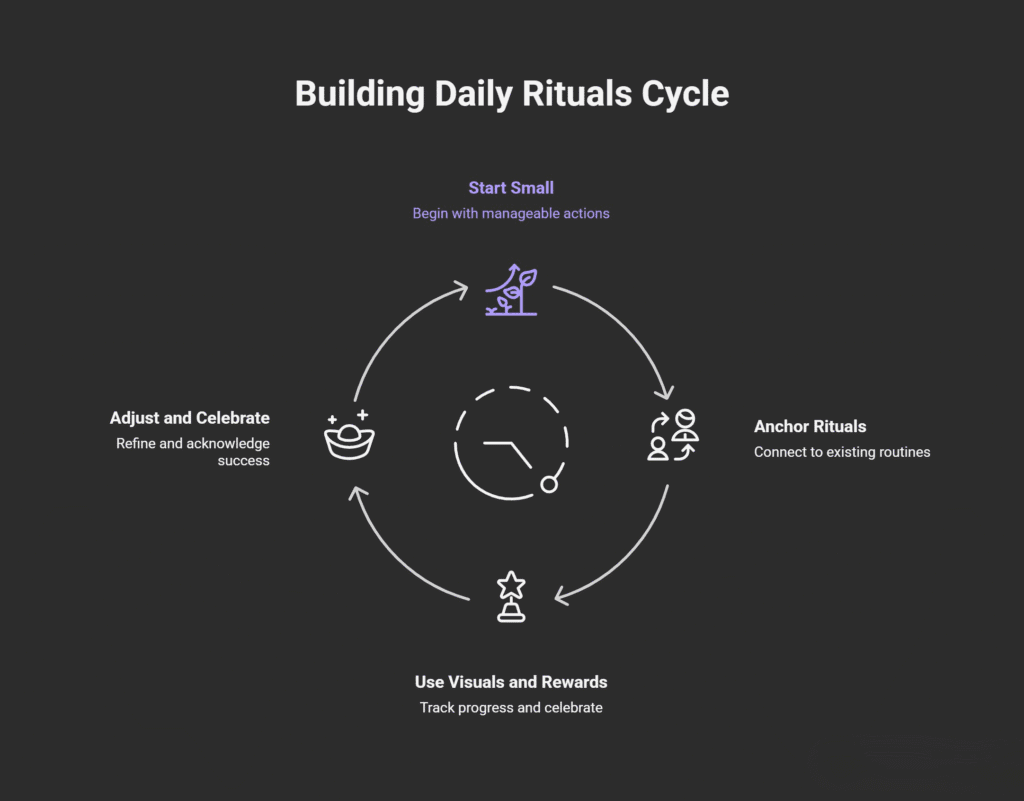
Start with one tiny ritual, connect it to something you’ll see or do anyway, and mark your victories. With expert-backed methods and a little patience, you might just surprise yourself.
Need a printable tracker or more real-world ritual ideas? Leave a comment and let’s build something together.
This article is part of our 7 Healthy Daily Lifestyle Choices That Transform Your Well-Being pillar guide, where we explore practical, science-backed habits that improve energy, sleep, focus, and overall well-being in everyday life.
My Experience & Insights
While digging into how to build daily rituals that stick, I found myself caught up in the same challenge most of us face—starting strong but fading out too soon. I wanted to understand what really makes a ritual last beyond the first couple of weeks. Research from experts like James Clear and Dr. Benjamin Gardner was eye-opening, showing just how important small, meaningful cues and emotional attachment are to habit formation.
To help others—and myself—put these ideas into practice, I developed a tool called the Ritual Difficulty Grader. It’s designed to score how likely your new ritual is to stick, based on key habit formation principles uncovered by behavioral science. The tool takes into account a few important factors: ritual description, how often you plan to do it, how long it lasts, and—crucially—the emotional meaning it holds for you.
What sets this tool apart is its focus on “stickiness,” not just clinical metrics. You don’t need to be a scientist, and it doesn’t judge you if your ritual seems hard. Instead, it gives a straightforward score plus tailored, research-backed suggestions to make your ritual easier to keep with small tweaks. For example, if your ritual lacks a strong emotional connection, it might suggest adding a short moment of gratitude or pairing the ritual with a favorite song to increase motivation.
I’m excited about how this kind of personalized feedback empowers people to design rituals that feel right for their lives, not some one-size-fits-all formula. You can test the tool yourself to see how your current or planned rituals score and get practical tips that make sticking with them much more doable. This hands-on approach bridges the gap between research and real life, turning abstract habit science into something tangible you can use every day.
If you’re curious, give the Ritual Difficulty Grader a try—it’s a simple way to take what experts like Risa Williams and others have revealed and make it work for you. Because building daily rituals that stick isn’t about perfection; it’s about creating meaningful habits that fit your pace and priorities.
Ritual Difficulty Grader
Find out how likely your new ritual is to stick and get personalized recommendations
Your ritual has a decent chance of becoming automatic with some adjustments
Recommendations to Improve Stickiness
Frequently Asked Questions
What is habit stacking and how does it help me build daily rituals?
Habit stacking means pairing a new habit onto an existing one, making it easier and more automatic to do. This approach is supported by behavioral science experts like James Clear and Dr. Benjamin Gardner, as it leverages cues already present in your day to build momentum naturally.
How do I choose the right anchor habit for habit stacking?
The best anchors are daily habits you perform consistently, like brushing your teeth or making coffee. Reliable, visible anchors increase the chance your new ritual will stick, as confirmed by research from behavior scientists and practical guidance from therapist Risa Williams.
Can habit stacking help me break bad habits too?
Yes! You can “interrupt stack” by planning a positive action immediately after an urge to perform the bad habit, such as taking deep breaths when you feel the urge to check your phone. This replacement technique is effective according to behavioral research and habit experts (source).
How long does it take for a new ritual built via habit stacking to become automatic?
Studies suggest habit automation commonly takes 2 to 4 weeks of consistent daily practice. The key is repetition and using reliable anchors that cue the new action naturally, as outlined in habit formation research.
What tools can I use to track and support my new daily rituals?
Physical trackers, apps, or checklists help visualize progress and reinforce momentum. For example, the Habit Stacking Builder tool I developed creates personalized habit stacking plans with timing suggestions to build your daily ritual sequences effectively.
Are there risks or common mistakes to avoid when building daily rituals with habit stacking?
Common mistakes include choosing inconsistent anchor habits, trying to change too many behaviors at once, or setting unrealistic goals. Experts like Risa Williams and Benjamin Gardner advise starting small, focusing on one habit at a time, and regularly reflecting on progress for adjustments.
💊 Do not rely solely on online content for diagnosis or treatment.
📜 Information here is provided “as is” without any warranties.