


💊 Do not rely solely on online content for diagnosis or treatment.
📜 Information here is provided “as is” without any warranties.
The 1% rule tiny daily habits approach teaches us that getting just 1% better each day creates remarkable health transformations over time. If you improve by 1% daily for a year, you’ll end up nearly 37 times better—but if you decline by 1% daily, you’ll drop almost to zero. This powerful concept proves that tiny, consistent actions shape our health far more than dramatic overhauls ever could.
I’ve seen countless people struggle with “all-or-nothing” health goals, only to burn out within weeks. But when you shift your focus to small, manageable improvements, everything changes. You’re not aiming for perfection tomorrow—you’re building a better version of yourself one tiny choice at a time.
- What Makes the 1% Rule Work for Health
- The Science Behind Small Health Habits
- Why Tiny Beats Dramatic Every Time
- Real Examples of 1% Health Improvements
- Daily Health Improvements
- How to Apply the 1% Rule Starting Today
- Common Mistakes to Avoid
- Building Your Personal Health Transformation
- The Ripple Effect Beyond Health
- Your Next 1% Improvement
- My Experience & Insights
- Health Transformation Tools
- Frequently Asked Questions
What Makes the 1% Rule Work for Health

The 1% rule relies on something called the compound effect—when small improvements stack up over time to create huge results. Think of it like a savings account: $1 invested daily seems tiny, but it grows into thousands over decades. Similarly, walking just 10 minutes daily burns about 50 calories, which adds up to roughly 18,000 calories over a year—that’s equivalent to 5 pounds of fat.
Sir Dave Brailsford, the British Cycling coach who revolutionized the sport, popularized this philosophy through what he called “the aggregation of marginal gains.” When he took over as Performance Director in 2002, British cycling had won only one gold medal in 76 years. His approach? Break down everything related to cycling and improve each part by 1%. Within six years, at the 2008 Beijing Olympics, his team won seven out of 10 available gold medals.
Brailsford didn’t just focus on training. His team made tiny tweaks to equipment, nutrition, sleep routines, and even hand-washing techniques to prevent illness. These microscopic improvements, when combined, created world-class athletes. The same principle applies to your health—you don’t need to overhaul your entire life. You just need to find small areas to improve by 1%.
The Science Behind Small Health Habits
Recent research shows that health-related habits typically take 2–5 months to develop, with significant individual variation ranging from 4 to 335 days. A meta-analysis of 20 studies involving 2,601 participants revealed significant improvements in habit scores between pre- and post-intervention, demonstrating that habit-focused interventions are highly effective.
What’s happening in your brain during this process? Dopamine plays a crucial role in habit formation. During early learning stages, dopamine is essential for reinforcing new behaviors, but with extended training, behaviors become more automatic and less dependent on dopamine for their expression. This is why starting small matters—you’re building neural pathways that eventually run on autopilot.
BJ Fogg, PhD, a behavior scientist at Stanford University and author of Tiny Habits, has spent over 20 years researching how behavior works. His behavior model shows that behavior happens when motivation, ability, and a prompt come together. By designing habits that are tiny and achievable—like doing one push-up while waiting for your shower to warm up—you’re setting yourself up for consistency rather than burnout.
Key factors that influence habit strength include your intention to perform the behavior, how much you enjoy it, specific implementation plans, creating daily routines, and the stability of the context where you perform the behavior. Morning practices, personal choice, and behavioral characteristics emerged as key determinants of successful habit formation.
Why Tiny Beats Dramatic Every Time

Here’s the thing most health advice gets wrong: we’re told we need massive transformations to see results. Join a gym, overhaul your diet, meditate for an hour daily. But research and real-world experience tell a different story. Small changes are easier to sustain, less intimidating to start, and more resilient when life throws curveballs.
When you commit to something tiny—like drinking one extra glass of water each morning or adding one vegetable to your dinner—the stakes feel manageable. You’re more likely to stick with it because it doesn’t require willpower or motivation. It just becomes part of what you do.
Consistency beats intensity every single time. Regular habits like 30-minute walks or light cycling strengthen your heart and improve mood without overwhelming your body. This balanced approach reduces burnout risks while delivering tangible physical and emotional benefits.
Real Examples of 1% Health Improvements
Let’s break down what 1% improvements actually look like in daily life. These aren’t abstract concepts—they’re concrete actions you can start today.
Daily Health Improvements
| Health Area | 1% Daily Improvement | Your Progress | Actions |
|---|---|---|---|
| Hydration | Add one 8oz glass of water to your morning routine | 25% | |
BenefitsBetter skin, improved digestion, enhanced energy levels within weeks TipsKeep a water bottle on your nightstand. Add lemon or mint for flavor. TrackMark each day you drink your morning glass. Aim for 7 days straight. |
|||
| Movement | Take the stairs instead of elevator once per day | 40% | |
BenefitsImproved cardiovascular health, stronger leg muscles, ~50 extra calories burned daily TipsStart with just one flight. Use proper form – don’t lean on the railing. TrackNote how many flights you climb each day. Try to increase gradually. |
|||
| Nutrition | Add one serving of vegetables to dinner | 60% | |
BenefitsBetter nutrient intake, reduced disease risk, weight management support TipsKeep frozen vegetables on hand for quick additions. Try roasting for better flavor. TrackLog which vegetable you added each day. Aim for variety throughout the week. |
|||
| Sleep | Go to bed 10 minutes earlier | 30% | |
BenefitsCumulative 60+ extra hours of sleep annually, improved mood and cognitive function TipsSet a bedtime alarm. Avoid screens 30 minutes before bed. Create a relaxing routine. TrackNote your bedtime each night. Track how you feel the next morning. |
|||
| Stress | Practice 2 minutes of deep breathing | 15% | |
BenefitsLower cortisol levels, better emotional regulation, reduced anxiety TipsTry the 4-7-8 technique: inhale 4 seconds, hold 7, exhale 8. Practice during transitions. TrackNote when you practiced and how it affected your stress levels. |
|||
| Strength | Do 5 push-ups or squats while coffee brews | 75% | |
BenefitsIncreased muscle tone, better metabolism, functional fitness gains TipsFocus on form over quantity. Try wall push-ups if regular ones are difficult. TrackRecord which exercise you did and how many. Gradually increase reps. |
|||
Each of these changes seems almost laughably small. That’s the point. You’re not trying to become a different person overnight. You’re just showing up 1% better than yesterday.
How to Apply the 1% Rule Starting Today

Ready to put this into practice? Here’s how to design your own tiny habit system without feeling overwhelmed.
Start ridiculously small. Choose one area where you want to improve and break it into the tiniest possible action. Want to read more health articles? Start with one paragraph daily. Want to exercise? Do one push-up. The goal isn’t the outcome—it’s building the consistency muscle.
Focus on habits, not outcomes. If your goal is running a marathon, obsessing over the 26.2-mile finish line will overwhelm you. Instead, focus on the habit of putting on your running shoes and stepping outside for 10 minutes. The habit of showing up matters more than immediate results.
Track your progress. Small changes can feel insignificant without tracking. Use apps, journals, or habit trackers to measure your daily 1% improvement. Logging daily steps or noting each small dietary tweak provides motivation and accountability.
Celebrate small wins. Acknowledge every tiny milestone. Each success reinforces the habit and keeps you motivated. After completing a week of consistent progress, treat yourself to something you enjoy. This positive reinforcement strengthens the neural pathways you’re building.
Be patient and trust the process. Research shows habits take anywhere from 4 to 335 days to fully form, depending on the person and behavior. Change takes time, but trust that your small daily improvements are compounding even when progress feels slow.
Common Mistakes to Avoid
Even with the best intentions, it’s easy to sabotage your tiny habits before they take root. Here are the pitfalls I’ve seen trip people up most often.
Setting “tiny” habits that aren’t actually tiny. If your habit still requires motivation or willpower, it’s too big. Dr. BJ Fogg suggests making habits so small they feel almost silly—like flossing one tooth or doing one push-up. You can always do more once you show up, but the barrier to entry needs to be nearly zero.
Skipping the prompt or anchor. Habits need a trigger. Behavior happens when motivation, ability, and a prompt come together. Link your new habit to something you already do automatically—after you pour your coffee, drink a glass of water; after you brush your teeth, do two minutes of stretching. This technique, called habit stacking, dramatically increases your success rate.
Measuring progress only by outcomes. If you’re only looking at the scale or your fitness tracker, you’ll miss the real magic happening: you’re becoming someone who shows up consistently. That identity shift—from “I want to be healthy” to “I am someone who takes care of my health”—is the true transformation.
Giving up after a missed day. Life happens. You’ll skip days. The key is getting back on track immediately rather than waiting for Monday or next month. One missed day is a minor setback; a week of missed days becomes a broken habit. Show yourself grace and restart the next day.
Building Your Personal Health Transformation
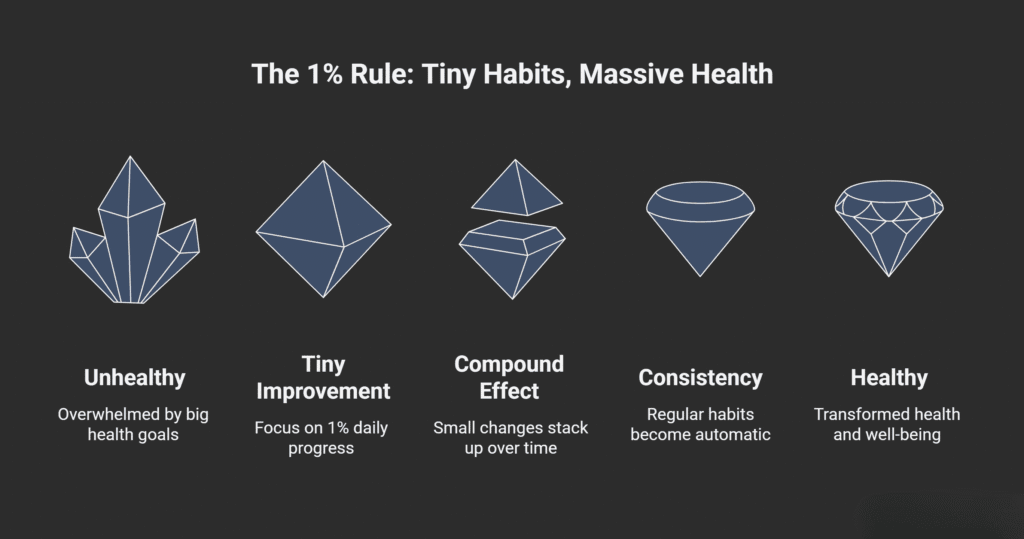
The beauty of the 1% rule is its flexibility. You’re not following someone else’s program or trying to match someone else’s results. You’re designing a system that fits your life, your schedule, and your goals.
Start by reflecting on which areas of your health you’d like to improve. Maybe it’s physical activity, nutrition, sleep quality, stress management, or all of the above. Pick one area—just one—and identify the smallest possible improvement you could make today. Break your goal into tiny, actionable steps that feel almost effortless.
For example, if you want to improve your diet, don’t overhaul everything at once. Start by adding one piece of fruit to your breakfast. Once that becomes automatic (remember, this might take a few months), add another small improvement. Maybe it’s swapping soda for water at lunch, or eating dinner at the table instead of in front of the TV.
As James Clear, author of Atomic Habits, explains: if you can get 1% better each day for one year, you’ll end up 37 times better by the time you’re done. Conversely, getting 1% worse each day leads to decline nearly down to zero. What starts as a small win or minor setback accumulates into something much more.
The Ripple Effect Beyond Health
Here’s what surprises most people about tiny health habits: the benefits extend far beyond physical wellness. When you start showing up for yourself in small ways, it creates a ripple effect across your entire life.
Daily routines and healthy habits compound over time, creating improvements in physical, mental, and emotional well-being. Consistently choosing a nutritious meal adds up to sustained dietary improvements. Regular exercise, even in short bursts, enhances cardiovascular health and muscle strength while fostering discipline and mindfulness that positively affect mental health.
You’ll likely notice improved self-confidence as you keep promises to yourself. Your energy levels increase, making other healthy choices easier. You develop resilience and patience, understanding that meaningful change doesn’t happen overnight. These mindset shifts become just as valuable as the physical health gains.
People around you notice too. When you’re consistent with small habits, you inspire others without saying a word. Your kids see you choosing movement. Your partner notices your commitment. Your friends ask what you’re doing differently. You become living proof that transformation doesn’t require suffering—just showing up 1% better each day.
Your Next 1% Improvement
The 1% rule tiny daily habits approach isn’t about perfection or dramatic before-and-after photos. It’s about sustainable, realistic progress that fits into real life. It’s choosing to be slightly better today than you were yesterday, and trusting that these small choices compound into significant transformation.
The research is clear: habit-focused interventions are highly effective, with significant improvements in habit scores across various health behaviors. The compound effect is real, whether you’re improving or declining by 1% daily. The question isn’t whether tiny habits work—it’s which direction you’ll choose.
So what’s your first 1% improvement? Maybe it’s drinking a glass of water when you wake up. Maybe it’s five minutes of movement before your shower. Maybe it’s going to bed just 10 minutes earlier tonight. Whatever it is, make it so small that you can’t fail. Then show up tomorrow and do it again.
Small habits, big impact. That’s not just a catchy phrase—it’s a proven path to transforming your health, one tiny choice at a time. Start today. Your future self will thank you for it.
This article is part of our 5 Powerful Small Daily Habits That Transform Your Life pillar guide, where we explore simple, realistic habits that compound over time to improve energy, focus, and overall well-being.
My Experience & Insights
While researching the 1% rule and how small changes transform health, I came across something fascinating: habit tracking significantly increases both habit strength and motivation over time. A 2020 study by Marco Stojanovic and colleagues found that students who tracked their habits were less likely to experience bad moods, felt less distracted, and showed measurably stronger motivation after just six weeks.
That got me thinking—if tracking is so powerful, why do most people still struggle to stick with tiny habits? The problem isn’t the concept; it’s the gap between knowing what to do and actually doing it consistently.
To bridge that gap, I developed two practical tools that take the guesswork out of applying the 1% rule to your own life.
The first is the Tiny Habit Builder, which creates a personalized 7-day tiny habit plan based on your current habits, goals, available time, and preferences. Instead of generic advice like “drink more water” or “exercise daily,” it generates specific 1% improvements tailored to where you’re starting from. For example, if you’re already walking 5,000 steps daily, it won’t tell you to suddenly aim for 10,000—it’ll suggest adding just 50-100 steps (literally one extra minute of movement). This approach aligns with research showing that interventions focusing on habit formation are highly effective, with moderate-to-large effect sizes across various health behaviors.
The second tool I built is the Compound Health Calculator, which visually shows you exactly how small daily improvements compound into massive yearly results. You input your current baseline (like drinking one glass of water daily or doing zero push-ups), select your 1% improvement area, and choose your timeframe. The calculator then generates a visual growth chart and yearly impact metrics. Seeing the numbers laid out—for instance, that adding just one vegetable serving daily equals 365 more servings annually—makes the compound effect feel real and tangible rather than abstract.
What surprised me during my research was discovering that AI-driven habit trackers achieve 85% adherence rates compared to just 40% for manual tracking by the second week. The difference? Personalized, adaptive feedback that meets people where they are. My tools apply that same principle—they don’t give you a one-size-fits-all plan; they adjust based on your unique starting point.
I also found compelling evidence that practicing Tiny Habits can significantly increase positive behaviors in the short term, with focused interventions (like gratitude practices) sustaining improvements for up to a month. This aligns perfectly with what we know about the 1% rule: specificity matters. Vague goals like “be healthier” don’t work. But “do two squats while my coffee brews” is concrete, measurable, and ridiculously achievable.
One pattern emerged consistently across the studies I reviewed: consistency beats intensity every time. A longitudinal analysis of health behavior changes showed that males in lifestyle intervention groups were more likely to transition into improved health behavior patterns—but only when those interventions were sustained over time. Short bursts of motivation led to temporary changes that didn’t stick.
That’s why I designed both tools to emphasize tracking and visualization. When you see your progress mapped out—even if it’s tiny—you’re more likely to keep going. Research backs this up: digital behavior change interventions that automatically collect data from wearables showed 83% of studies successfully tracked physical activity, with step count being the most common parameter.
The real breakthrough for me came when I realized that the 1% rule isn’t just about math—it’s about psychology. BJ Fogg’s research at Stanford proves that behavior happens when motivation, ability, and a prompt align. My tools handle all three: they boost motivation by showing you your compound progress, ensure ability by keeping changes microscopic, and provide prompts through structured 7-day plans.
If you’re skeptical about whether tiny changes actually compound into significant health improvements, I encourage you to try the Compound Health Calculator. Plug in any small habit—drinking one extra glass of water, walking 50 more steps, eating one additional vegetable—and watch what happens over 30 days, 90 days, or a full year. The numbers don’t lie, and seeing them visualized makes the abstract concept of compounding feel startlingly concrete.
The evidence is overwhelming: tiny habits work, tracking amplifies their effectiveness, and personalization keeps you consistent. You don’t need a complete life overhaul. You just need to identify your first 1% improvement and show up for it tomorrow.
Health Transformation Tools
Use these tools to design and visualize your 1% daily improvements
Build Your Personalized Tiny Habit Plan
Create a 7-day plan of 1% improvements tailored to your lifestyle.
Your Personalized 7-Day Tiny Habit Plan
Tip: Focus on consistency, not perfection. Each small step builds momentum!
See How 1% Daily Improvements Compound Over Time
Discover the powerful math behind tiny daily habits.
Your Compound Improvement Results
Visualizing Your Growth
The Math: A 1% daily improvement compounds to 0% improvement over one year!
Frequently Asked Questions
What is the 1% rule in health habits?
The 1% rule in health habits means improving by just 1% each day, which compounds into being 37 times better after one year. Instead of dramatic life overhauls, you focus on tiny, manageable improvements—like drinking one extra glass of water, taking 50 more steps, or adding one vegetable to your meal. These microscopic changes seem insignificant at first, but they stack up over time through the compound effect, creating transformative health results without requiring massive willpower or motivation.
How long does it take for tiny habits to become automatic?
Health-related habits typically take 2–5 months to develop, with significant variation ranging from 4 to 335 days depending on the person and the specific behavior. The key factors include how enjoyable you find the habit, how specific your implementation plan is, the stability of your routine, and whether you practice it at consistent times. Starting ridiculously small increases your success rate because it requires less willpower and feels easier to maintain during the formation period.
Why do tiny habits work better than big changes?
Tiny habits work better because they eliminate the barriers that cause most people to quit: overwhelming difficulty, depleted motivation, and decision fatigue. When you commit to something microscopic—like doing one push-up or flossing one tooth—the stakes feel manageable and you’re more likely to maintain consistency. BJ Fogg’s behavior model shows that behavior happens when motivation, ability, and a prompt align. Tiny habits maximize ability (they’re easy) while minimizing motivation requirements, making them sustainable long-term unlike intense bursts that rely on temporary willpower.
Can 1% daily improvements really transform my health?
Yes, the math and research both confirm this. If you improve by 1% daily, you’ll be 37 times better after one year—that’s the compound effect in action. Real-world evidence includes Sir Dave Brailsford’s British Cycling team, which went from one gold medal in 76 years to dominating the Olympics by making hundreds of tiny 1% improvements. In health terms, walking just 10 minutes daily burns approximately 18,000 calories annually (equivalent to 5 pounds of fat), while adding one vegetable serving daily equals 365 more servings per year—significant nutritional improvement from one small choice.
What’s the best way to track my 1% improvements?
The best tracking method combines simplicity with visibility. Research shows habit tracking significantly increases both habit strength and motivation, with studies finding that people who track habits experience better moods, less distraction, and stronger motivation. You can use digital apps, bullet journals, simple calendars with checkmarks, or specialized tools like habit tracking dashboards. The key is making your progress visible—when you see consistent checkmarks or upward trend lines, it reinforces the behavior and keeps you accountable. AI-driven trackers show even higher adherence rates (85% vs. 40% for manual tracking) by providing personalized, adaptive feedback.
What if I miss a day of my tiny habit?
Missing one day is completely normal and won’t derail your progress—the key is getting back on track immediately rather than waiting for Monday or next month. Habit formation research shows that occasional missed days don’t significantly impact long-term habit development as long as you resume quickly. Think of it like missing one workout or one healthy meal—it’s the pattern over weeks and months that matters, not perfection every single day. Give yourself grace, avoid the “all-or-nothing” mentality, and simply restart your tiny habit the next day. Consistency over perfection is what builds lasting transformation.
💊 Do not rely solely on online content for diagnosis or treatment.
📜 Information here is provided “as is” without any warranties.