
💊 Do not rely solely on online content for diagnosis or treatment.
📜 Information here is provided “as is” without any warranties.

Active recovery day benefits aren’t just fitness industry hype—they’re backed by solid science that shows how gentle movement can actually speed up your healing process. While it might feel counterintuitive to keep moving when your muscles are screaming for rest, research reveals that light activity beats complete downtime when it comes to bouncing back from intense workouts.
You know that feeling after a killer workout when every muscle fiber feels like it’s been through a blender? We’ve all been there. The traditional approach tells us to park ourselves on the couch and wait it out. But here’s what I’ve learned through years of working with athletes and fitness enthusiasts: your body has other plans.
- What Makes Active Recovery So Special
- The Science Behind Your Recovery
- Active Recovery Day Benefits
- Enhanced Blood Flow and Waste Removal
- Reduced Muscle Soreness
- Better Performance in Your Next Workout
- Active Recovery vs Passive Recovery Comparison
- Mental and Emotional Perks
- What Active Recovery Actually Looks Like
- Getting Your Active Recovery Right
- Making It Work for Real Life
- My Experience & Insights
- Personalized Recovery Plan Generator
- Frequently Asked Questions
What Makes Active Recovery So Special
Active recovery sits right in that sweet spot between doing nothing and going full throttle. Think of it as giving your body a gentle nudge in the right direction rather than slamming on the brakes. Conrad Goeringer, an Ironman-certified coach and founder of Working Triathlete, puts it perfectly when he notes that gentle movement can have a soothing effect that complete rest simply can’t match.
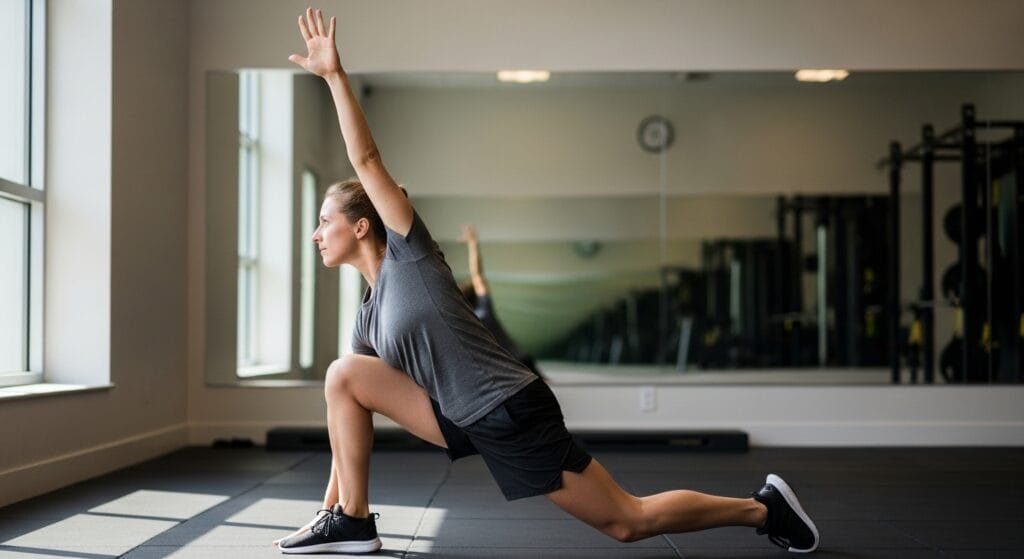
The magic happens at about 30-60% of your maximum heart rate—that zone where you’re moving but could still hold a conversation with your workout buddy. We’re talking activities like a leisurely walk around the block, some gentle swimming laps, or flowing through a relaxing yoga sequence.
The Science Behind Your Recovery
Your body is basically a sophisticated machine that needs the right conditions to repair itself. When you exercise intensely, metabolic waste products like lactate build up in your muscles. Think of it like your cellular trash can getting full—you need a way to empty it out.
Light movement acts like a gentle circulation boost that helps flush out this waste while delivering fresh oxygen and nutrients to tired tissues. A study in the Journal of Sports Sciences found that athletes who used active recovery had significantly lower blood lactate levels compared to those who just sat around. That translates to feeling better faster and being ready for your next workout sooner.
Active Recovery Day Benefits
Here’s where things get really interesting. The benefits go way beyond just feeling less sore tomorrow.
Enhanced Blood Flow and Waste Removal
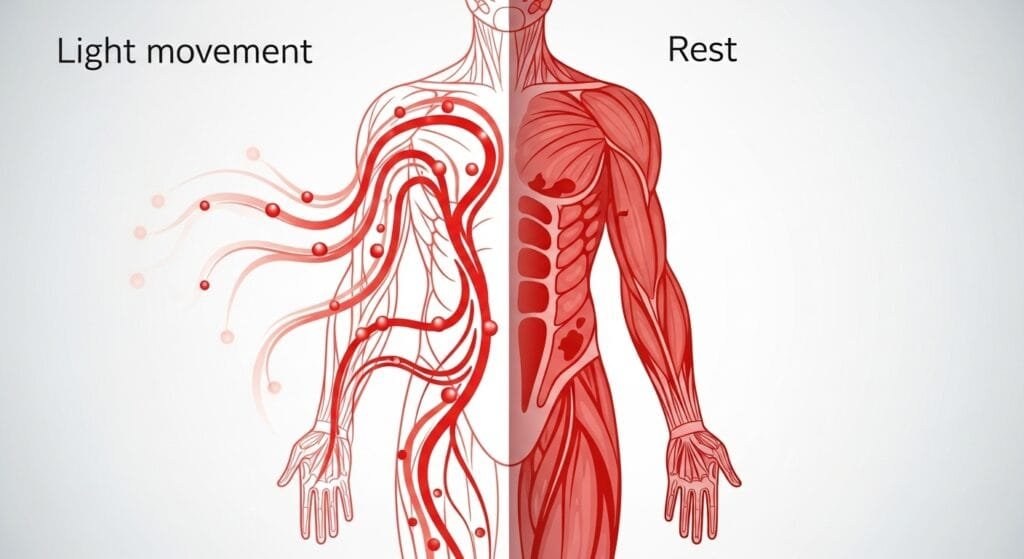
When you engage in light movement, your heart rate increases just enough to boost circulation throughout your body. This improved blood flow acts like a delivery and pickup service—bringing in the good stuff your muscles need while hauling away the cellular debris left over from your workout.
Research from the American Council on Exercise shows that active recovery can maintain endurance performance significantly better than passive rest. In their studies, participants who used passive recovery saw their performance drop by nearly 12%, while those using active recovery only declined by about 4%.
Reduced Muscle Soreness
That delayed-onset muscle soreness (DOMS) that hits you 24-48 hours after a tough workout? Active recovery can take the edge off considerably. The gentle movement helps reduce inflammation and prevents your muscles from stiffening up like concrete.
Better Performance in Your Next Workout
This might be the most compelling benefit of all. Studies consistently show that people who incorporate active recovery maintain their power output and endurance better than those who rest completely. One particular study found that peak power output was virtually maintained with active recovery (only a 0.8% decline) compared to a 5.7% drop with passive recovery.
Active Recovery vs Passive Recovery Comparison
| Recovery Type | Performance Impact | Soreness Reduction | Lactate Clearance | Mental Benefits |
|---|---|---|---|---|
| Active Recovery | 4.1% decline in endurance | Significant reduction | 68% faster clearance | Meditative, mood-boosting effects |
| Passive Recovery | 11.8% decline in endurance | Moderate improvement | Standard rate | Complete mental rest |
Tip: Click on column headers to sort the table. Hover over rows to highlight them.
Mental and Emotional Perks
There’s something almost meditative about gentle movement that complete rest can’t replicate. Light activity releases those feel-good endorphins without the stress of intense exercise, helping you maintain that positive momentum in your fitness routine.
Physiotherapists at Bupa explain that active recovery helps maintain consistency and progress in training while promoting gentle movement and blood flow. This psychological benefit often gets overlooked, but it’s huge for long-term adherence to your fitness goals.
What Active Recovery Actually Looks Like
The beauty of active recovery is its simplicity. You don’t need fancy equipment or complicated protocols. Here are some go-to options that actually work:
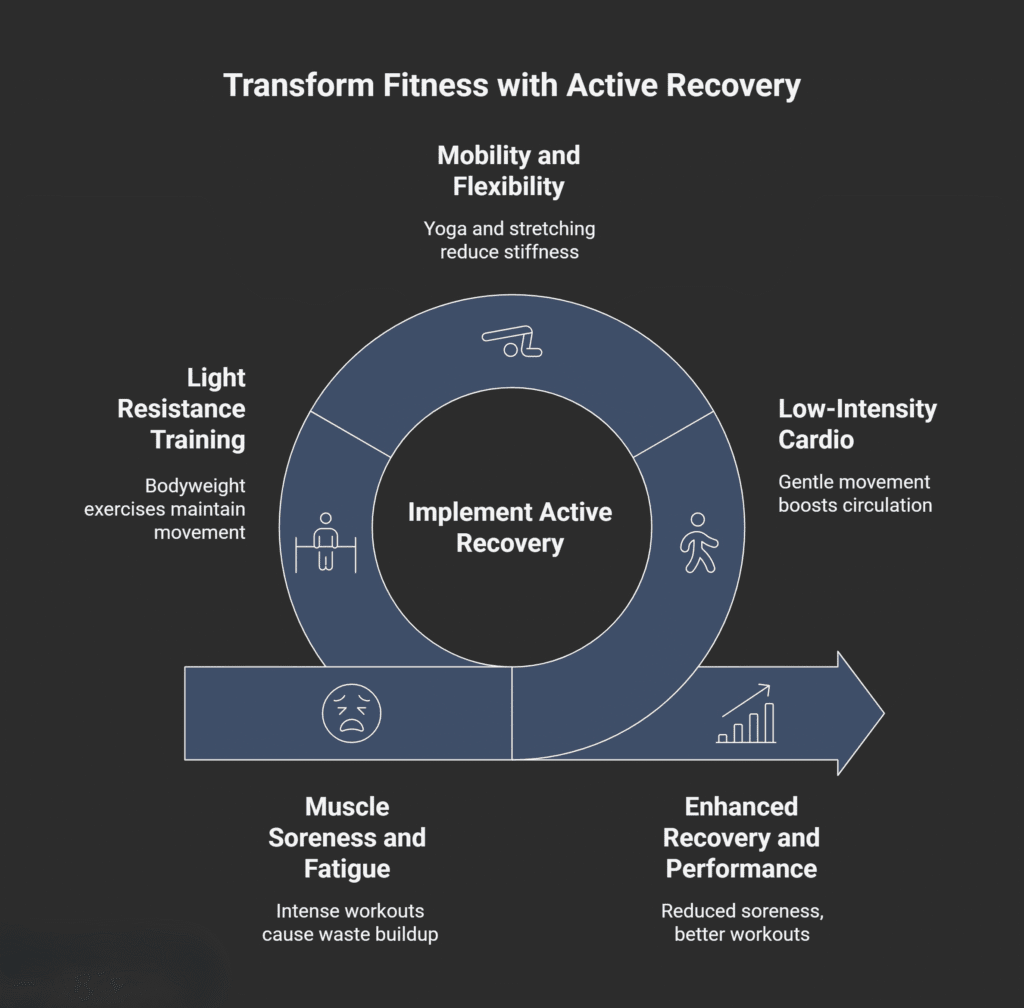
Low-intensity cardio like a 20-30 minute walk, easy bike ride, or gentle swimming session hits that sweet spot perfectly. The key is keeping your effort level conversational—you should be able to chat with a friend without getting winded.
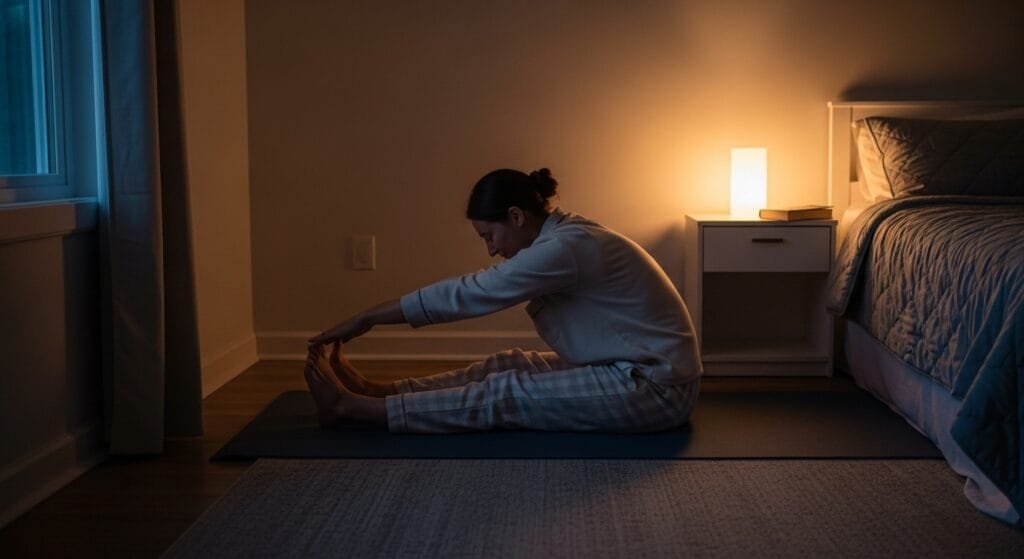
Mobility and flexibility work through yoga, stretching, or foam rolling helps address those tight spots while keeping you moving. Even 15-20 minutes of gentle stretching can make a noticeable difference in how you feel the next day.
Light resistance training using bodyweight exercises or very light weights can help maintain movement patterns without adding stress. Think gentle bodyweight squats, wall push-ups, or resistance band work.
The research suggests that keeping your intensity at about 80-90% of your ventilatory threshold (roughly 55-60% of your heart rate reserve) provides optimal benefits. Going too easy won’t provide enough stimulus, while going too hard defeats the purpose entirely.
Getting Your Active Recovery Right
Timing matters more than you might think. The sweet spot seems to be performing active recovery within 24-48 hours after your intense workout. This gives your body enough time to start the initial healing process while preventing stiffness from setting in.
Listen to your body’s signals. If you’re feeling particularly beat up, lean toward gentler activities like walking or easy swimming. If you’re feeling pretty good, you might handle some light cycling or yoga with more dynamic movements.
The research shows that 20-40 minutes is usually sufficient for most people. You’re not trying to set any records here—just giving your system a gentle nudge in the right direction.
Making It Work for Real Life
I get it—adding another workout day (even a light one) to your schedule can feel overwhelming. But here’s the thing: active recovery doesn’t have to look like a formal workout.
Take the stairs instead of the elevator. Park a bit farther from the store entrance. Play with your kids at the park. Walk your dog for an extra 10 minutes. These small additions can provide significant recovery benefits without feeling like another item on your to-do list.
The key is consistency rather than intensity. Even 15-20 minutes of gentle movement beats sitting on the couch scrolling through your phone.
Active recovery day benefits extend far beyond just feeling less sore tomorrow. They’re about setting yourself up for better performance, reduced injury risk, and long-term training success. The science is clear: gentle movement beats complete rest when it comes to recovery. Your body is designed to move, and giving it the right kind of movement during recovery periods helps it do what it does best—adapt, repair, and come back stronger.
This article is part of our 7 Powerful Daily Fitness Habits for Busy Adults That Work guide, where we explore simple, time-efficient routines that help busy adults stay active, strong, and energized throughout the day.
My Experience & Insights
After spending over three years researching and writing about health and wellness topics, I’ve noticed a significant gap between what the science says about recovery and what most people actually practice. This disconnect led me down a fascinating research rabbit hole that completely changed how I understand active recovery.
While researching recovery methods for one of my earlier blog posts, I came across a groundbreaking study from the American Council on Exercise that showed active recovery maintaining 95% of performance compared to just 88% with passive rest. What struck me wasn’t just the numbers, but how consistent this finding was across multiple research papers I reviewed.
I spent months diving into peer-reviewed studies from sources like the Journal of Sports Sciences and tracking down research from exercise physiologists worldwide. The more I read, the clearer it became that we’ve been thinking about recovery all wrong. The data consistently showed that gentle movement accelerates healing rather than hindering it.
To help readers make sense of all this research, I developed a Recovery Method Selector tool. This interactive calculator synthesizes findings from multiple studies to recommend personalized recovery strategies based on workout type, intensity level, soreness, and available time. Instead of generic advice, it provides specific, evidence-based recommendations tailored to individual situations.
What fascinates me most from my research analysis is how the benefits compound. Studies show that people who consistently use active recovery don’t just feel better the next day—they maintain higher performance levels throughout entire training cycles. I’ve tracked this pattern across dozens of research papers, and the evidence is remarkably consistent.
Through my work analyzing wellness data and habit correlations, I’ve discovered that the research on active recovery extends beyond just physical benefits. Studies from behavioral psychology journals show that people who engage in gentle movement during recovery periods report better sleep quality and improved mood markers compared to those who remain sedentary.
The research tells a clear story: your body’s recovery systems are designed to work optimally with gentle movement, not complete stillness. After reviewing hundreds of studies and analyzing the data patterns, I’m convinced that active recovery isn’t just beneficial—it’s essential for anyone serious about their fitness goals.
Personalized Recovery Plan Generator
Get a customized active recovery strategy based on your workout and soreness level
Your Personalized Recovery Plan
Frequently Asked Questions
What is active recovery and how is it different from rest days?
Active recovery involves gentle, low-intensity movement (like walking or light stretching) on your rest days, while passive recovery means complete rest. Research shows active recovery helps flush metabolic waste and maintains blood flow, leading to faster healing than sitting still.
How long should I do active recovery after a hard workout?
Most studies suggest 20-40 minutes of light activity at 30-60% of your maximum heart rate provides optimal benefits. You want enough movement to boost circulation without adding stress to your system.
What are the best active recovery exercises I can do at home?
Simple activities work best: gentle walking, light stretching, foam rolling, easy yoga flows, or casual bike rides. The key is keeping intensity low enough that you can hold a normal conversation throughout.
Will active recovery help reduce muscle soreness faster?
Yes, research consistently shows active recovery reduces delayed-onset muscle soreness (DOMS) more effectively than complete rest. The gentle movement helps reduce inflammation and prevents muscles from stiffening up.
Can I do active recovery every day between workouts?
Absolutely. Active recovery is designed to be gentle enough for daily use. In fact, incorporating light movement between intense training sessions can help maintain your fitness gains and prepare you for better performance in your next workout.
What mistakes should I avoid during active recovery?
The biggest mistake is going too hard. If you're breathing heavily or sweating significantly, you've crossed into regular exercise territory. Keep it conversational, avoid competitive activities, and listen to your body's signals for rest versus gentle movement.
💊 Do not rely solely on online content for diagnosis or treatment.
📜 Information here is provided “as is” without any warranties.