


💊 Do not rely solely on online content for diagnosis or treatment.
📜 Information here is provided “as is” without any warranties.
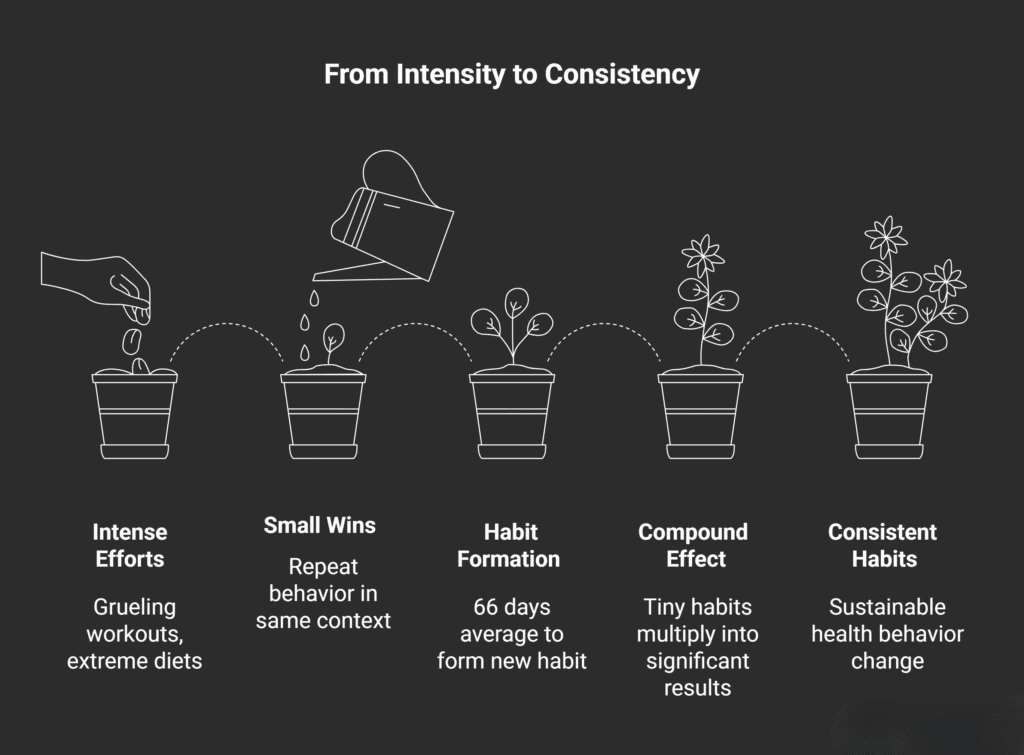
You’ve probably heard that consistency matters more than intensity health habits, and I’m here to tell you it’s absolutely true. We’re so used to thinking we need to push ourselves to the limit—grueling workouts, extreme diets, total lifestyle overhauls. But here’s the thing: those intense bursts rarely stick. Research shows that more than half of adults abandon their New Year’s resolutions, with 23% giving up before January even ends. The real secret to lasting change? Small, steady actions repeated day after day.
Let’s explore why this approach works and how you can use it to transform your health for good.
- The Science Behind Small Wins
- Why Intensity Burns Out
- Consistency Matters More Than Intensity Health Habits
- The Habit Formation Timeline
- Practical Strategies to Build Consistent Habits
- Real-World Applications
- The Power of “Exercise Snacking”
- Why This Approach Works for Everyone
- My Experience & Insights
- Breaking Bad Habits
- Looking Ahead
- Habit Formation Timeline Calculator
- Frequently Asked Questions
The Science Behind Small Wins
When you repeat a behavior in the same context over and over, something remarkable happens in your brain. You start forming neural pathways that make that action easier each time. Dr. Wendy Wood, a Provost Professor of Psychology and Business at the University of Southern California, has spent decades studying how habits form and change. Her research reveals that almost 40% of our daily actions are performed habitually—meaning we’re not even consciously thinking about them.
According to Dr. Phillippa Lally, a Senior Lecturer in Psychology at the University of Surrey, it takes an average of 66 days to form a new habit. Her groundbreaking study published in the European Journal of Social Psychology found that the timeline can range anywhere from 18 to 254 days, depending on the person and the behavior. The key takeaway? Missing one day here and there doesn’t ruin your progress. What matters is getting back on track and maintaining that consistency over time.
Dr. BJ Fogg, founder and director of the Behavior Design Lab at Stanford University, recommends starting with habits that take less than 30 seconds to complete. Why? Because tiny actions are fast, safe, and don’t require massive amounts of motivation or willpower to succeed. His Tiny Habits method focuses on anchoring new behaviors to routines you already do—like doing two push-ups after you brush your teeth—and celebrating immediately to create a positive emotional reward.
Why Intensity Burns Out
Intense efforts feel impressive at the start, but they’re tough to maintain. Think about it: how many times have you vowed to hit the gym for an hour every single day, only to burn out within a week? High-intensity workouts and extreme lifestyle changes demand a lot of mental and physical energy. When you’re already dealing with work stress, family responsibilities, and everything else life throws at you, that extra burden can feel overwhelming.
Research published in Behavioral Medicine found that mental fatigue significantly reduces physical effort people are willing to invest in exercise. After completing high cognitive control tasks, participants reported greater mental fatigue, reduced their intended workout intensity, and performed less total work during their exercise sessions. Translation: when you’re mentally drained, pushing yourself harder becomes nearly impossible.
There’s also the injury risk factor. A study in PMC concluded that intense, long exercise can lead to higher levels of inflammatory mediators, increasing the risk of injury and chronic inflammation. On the flip side, moderate exercise with appropriate rest periods achieves maximum benefit without those risks. You’re more likely to stick with something that doesn’t leave you sore, exhausted, or sidelined by injury.
Consistency Matters More Than Intensity Health Habits
Here’s where the magic happens. Small, consistent actions create what experts call the compound effect. Just like saving a few dollars every day adds up to a substantial amount over time, tiny health habits multiply into significant results. A 2020 study in Health Psychology Review found that participants who focused on incremental changes like drinking one extra glass of water daily were three times more likely to maintain those habits after six months compared to those pursuing ambitious goals.
BJ Fogg’s model for behavior change—B = MAP—shows that a behavior occurs when Motivation, Ability, and a Prompt come together at the same time. Rather than relying on motivation (which fluctuates), Fogg urges us to focus on making behaviors easy and setting up prompts that naturally trigger the action. This creates what he calls “success momentum”—the idea that progress comes from the frequency of small wins, not their size.
Consider these scientifically proven examples:
- Walking 10 minutes daily improves cardiovascular health by 50% over a year
- Adding one vegetable serving daily reduces disease risk by 5% each month
- Getting 30 extra minutes of sleep nightly compounds to 182 hours of recovery yearly
Dr. Michael Jensen of the Mayo Clinic notes: “Small changes in daily movement can lead to profound metabolic improvements over time. It’s not about intense workouts; it’s about consistent activity.”
The Canadian 24-hour movement guidelines removed the 10-minute minimum bout requirement, acknowledging that short, frequent bursts of activity make health goals more accessible and achievable for more people. Research shows that the benefits of moderate to vigorous physical activity apply whether it happens sporadically or in sustained bouts. Every bit counts!
The Habit Formation Timeline
Understanding how habits form can help you set realistic expectations. Dr. Phillippa Lally’s research identified three distinct phases:
First 2–3 weeks: Conscious effort. You’re setting reminders, fighting laziness, and your prefrontal cortex (the part of your brain responsible for planning and self-control) is working hard.
18–66 days: Transition. The action no longer requires iron willpower, but it’s not yet automatic. If you skip a day or two, you might still derail your progress.
After 66+ days: Automaticity. The basal ganglia (deep brain structures) take over, and you do the action even without consciously thinking about it.
This timeline shows why consistency beats intensity. You’re not trying to achieve perfection on day one. You’re building a foundation that gradually becomes second nature.
Practical Strategies to Build Consistent Habits
Ready to put this into practice? Here are some evidence-based strategies:
Start ridiculously small. Pick a habit so tiny it feels almost insignificant. Want to read more? Commit to reading one page per day. Want to build strength? Do five push-ups each morning. These small actions build the foundation for bigger habits over time.
Use habit stacking. BJ Fogg created this technique, which pairs a new habit with a routine you already do. For example: “After I pour my morning coffee, I’ll drink a glass of water” or “After I sit down for lunch, I’ll eat one vegetable.”
Celebrate immediately. This might sound silly, but it works. After completing your tiny habit, do something that generates a positive emotion—a fist pump, a smile, saying “Yes!” out loud. This instant celebration wires the habit into your brain.
Focus on identity, not outcomes. Dr. Wendy Wood’s research emphasizes that the most enduring changes are internally driven. Instead of saying “I want to lose 10 pounds,” try “I’m someone who moves their body every day.” This shift in identity fosters ownership and increases long-term success.
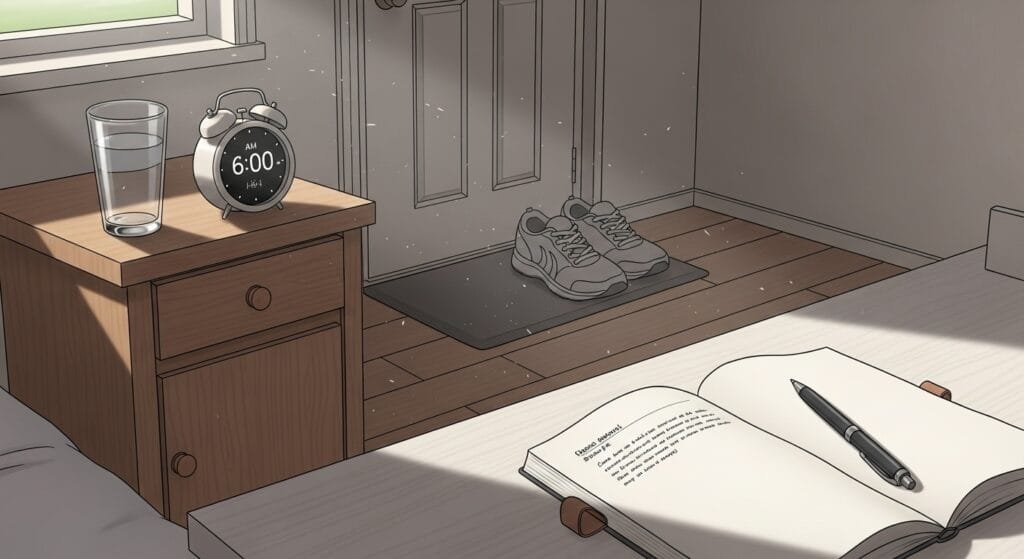
Remove barriers. Make your desired behavior as easy as possible. Want to exercise in the morning? Sleep in your workout clothes. Want to eat healthier? Prep your meals on Sunday. The easier you make it, the more likely you’ll stick with it.
| Factor | Intense Efforts | Consistent Small Habits |
|---|---|---|
| Sustainability |
Hard to maintain long-term
Intense efforts often lead to burnout and are difficult to sustain over extended periods.
|
Easy to sustain over months and years
Small, consistent habits integrate more easily into daily life and become automatic over time.
|
| Injury Risk |
Higher due to strain and inflammation
Pushing too hard too fast increases the risk of both acute injuries and chronic inflammation.
|
Lower with moderate activity
Gradual progress with moderate intensity reduces strain on the body and minimizes injury risk.
|
| Motivation Required |
High and constant
Intense efforts demand significant willpower and motivation for each session.
|
Low after initial phase
Once habits are established, they require minimal conscious effort to maintain.
|
| Mental Fatigue Impact |
Significantly reduces performance
Mental exhaustion makes it difficult to maintain the focus needed for intense efforts.
|
Minimal impact with shorter sessions
Brief, consistent activities are less affected by mental fatigue and can even help alleviate it.
|
| Time to Automaticity |
Often abandoned before habit forms
The difficulty of intense efforts means many people give up before the behavior becomes automatic.
|
66 days average to reach automaticity
Research shows it takes about 66 days on average for small behaviors to become automatic habits.
|
| Success Rate (6 months) |
Lower adherence
Studies show significantly lower long-term adherence rates with intense approaches.
|
3x higher adherence with incremental changes
Gradual, incremental changes result in approximately three times higher adherence after six months.
|
This comparison makes it clear: you’ll get better results by showing up consistently with moderate effort than by going all-out sporadically.
Real-World Applications
Let’s bring this home with some examples you can try today:
For fitness: Instead of committing to hour-long gym sessions, try “exercise snacking”—short bursts of movement throughout the day. Take the stairs during your lunch break, do a two-minute stretch when you wake up, or walk around the block after dinner. These small actions are more achievable and effective than occasional high-intensity workouts.
For nutrition: Rather than overhauling your entire diet, add one healthy choice per day. Drink one extra glass of water before your morning coffee, add a serving of vegetables to lunch, or swap one processed snack for a piece of fruit. Over time, these choices compound into significant dietary improvements.
For sleep: Commit to going to bed just 15 minutes earlier. That small shift adds up to over 90 extra hours of rest per year. You could also create a simple bedtime routine—like reading one page or doing a two-minute stretch—that signals to your body it’s time to wind down.
For stress management: Try a micro-meditation practice. Commit to two minutes of deep breathing each day. It’s so small that you can’t talk yourself out of it, and over time, it naturally expands as you experience the benefits.
The Power of “Exercise Snacking”
This concept deserves special attention because it perfectly demonstrates why consistency beats intensity. Exercise snacking refers to short bursts of physical activity scattered throughout your day—things like doing 10 squats while waiting for your coffee to brew, taking a quick walk between meetings, or doing some desk stretches mid-afternoon.
Research shows these small, consistent actions can be more effective than occasional high-intensity workouts. The goal isn’t to replace structured exercise entirely; it’s to make movement a natural, effortless part of your daily routine. When you remove the pressure of a 60-minute workout, you eliminate one of the biggest barriers to staying active.
A study on habit formation in fitness settings found that members who reported higher activity levels early on were more likely to develop and maintain consistent exercise habits. The key was frequency, not intensity. Those who visited the gym regularly—even for short sessions—built stronger habits than those who showed up sporadically for marathon workouts.
Why This Approach Works for Everyone
One of the best things about building consistent small habits is that it works regardless of your starting point. You don’t need to be in great shape, have tons of free time, or possess superhuman willpower. You just need to commit to something small and doable.
A University of Melbourne study found that adults who established “pre-commitment” habits like meal prepping or packing a gym bag the night before reported 40% lower stress levels and made healthier choices consistently. These small acts of preparation remove decision fatigue and make the right choice the easy choice.
Dr. Wendy Wood explains that habits protect us from temptation. When healthy behaviors become automatic, we’re less likely to be derailed by momentary cravings or low willpower. Your “second self”—the subconscious mind that controls automatic habits—takes over, freeing up your conscious brain for more complex decisions.
This article is part of our 7 Healthy Daily Lifestyle Choices That Transform Your Well-Being pillar guide, where we explore practical, science-backed habits that improve energy, sleep, focus, and overall well-being in everyday life.
My Experience & Insights
I’ve seen this principle play out countless times, both in my own life and through the wellness tools we’ve built at healthiwellness.com. When users interact with our habit-building calculators, the ones who start small almost always report better long-term results than those who try to change everything at once.
One insight that stands out: people underestimate how much a 1% improvement compounds over time. If you get just 1% better each day, you’ll be nearly 38 times better by the end of the year. That’s the power of the compound effect in action.
Another observation: the quality of your environment matters as much as your motivation. When you design your space to support small healthy actions—like keeping a water bottle on your desk, placing your running shoes by the door, or prepping healthy snacks in advance—you’re setting yourself up for success without relying on willpower.
I’ve also learned that celebration is underrated. It feels awkward at first to fist-pump after drinking a glass of water, but that immediate positive reinforcement truly does wire the behavior into your brain. Don’t skip this step!
Breaking Bad Habits
Consistency works both ways. Just as small positive actions compound into big results, small negative actions compound into big problems. The good news? Dr. Wendy Wood’s research identifies ways to disrupt habit associations so you’re freer to act in new ways that meet your current goals.
The key is understanding that habits are triggered by familiar contexts—times of day, locations, other people. Even when you consciously decide to do something else (eat less, exercise more, spend less money), the practiced habit keeps coming to mind in those familiar situations. To break a bad habit, you need to either change the context or create a competing positive habit in that same context.
Looking Ahead
The research is clear: sustainable health behavior change comes from consistency, not intensity. Whether you’re trying to build fitness, improve your diet, sleep better, or manage stress, small daily actions will get you further than sporadic extreme efforts.
Start by identifying one tiny habit you can commit to for the next 66 days. Make it so small you can’t fail. Anchor it to something you already do. Celebrate immediately after you complete it. Then watch as that small seed grows into something transformational.
Remember what BJ Fogg teaches: “Change is always difficult” is a myth. Change can be easy if you design your behavior thoughtfully, start small, and stay consistent. You’ve got this!
Habit Formation Timeline Calculator
Discover exactly when your new habit will become automatic
Your Habit Formation Journey
Based on Dr. Phillippa Lally’s research on habit formation
Your habit should become automatic around:
[Date will appear here]
Frequently Asked Questions
How long does it take to form a consistent health habit?
On average, it takes about 66 days for a new behavior to become automatic, according to research by Dr. Phillippa Lally at University College London. However, the timeline varies widely based on the person and the behavior—ranging from 18 to 254 days in her study.
Simple habits like drinking water with lunch typically feel easier after about 30-60 repetitions (4-8 weeks), while more complex habits like exercising for 15 minutes may take 60-100 repetitions (2-3 months). The good news? Missing a day occasionally doesn’t derail your progress—consistent repetition over time is what matters most.
What are some easy small habits I can start today to improve my health?
Start with habits so tiny they take less than 30 seconds to complete. Here are some proven examples:
Drink one glass of water right after waking up
Do 5 push-ups or squats while your coffee brews
Add one vegetable to your lunch plate
Take a 2-minute walk after each meal
Do a 60-second stretch before bed
Read one page of a book each night
The key is making the habit so small you can’t fail. Once it becomes automatic, you can naturally expand the behavior as you experience the benefits. These micro-actions compound into significant health improvements over time.
Why do intense efforts like extreme workouts or crash diets rarely work long-term?
Intense efforts fail for several research-backed reasons:
Mental fatigue: Studies show that mental fatigue significantly reduces physical effort people are willing to invest in exercise. When you’re already stressed, extreme efforts become nearly impossible to sustain.
Injury risk: Intense, prolonged exercise increases inflammatory mediators, raising the risk of injury and chronic inflammation. This often sidelines people before habits can form.
Motivation dependency: Intense efforts require constant high motivation, which naturally fluctuates. When motivation dips, the habit collapses.
Abandonment before automaticity: Most people abandon intense routines within weeks, long before the 66-day mark when habits become automatic. Moderate, consistent actions achieve better long-term results with lower risk.
How can I stay motivated when small changes feel too slow?
Reframe your perspective using these expert strategies:
Focus on identity, not outcomes: Instead of “I want to lose 10 pounds,” try “I’m someone who moves their body daily.” This identity shift increases long-term success.
Track the compound effect: Remember that 1% better each day equals 38 times better by year-end. Small changes multiply exponentially over time.
Celebrate immediately: After completing your tiny habit, create a positive emotion—do a fist pump, smile, or say “Yes!” This instant celebration wires the behavior into your brain.
Trust the science: Research shows people focusing on incremental changes are 3x more likely to maintain habits after six months compared to those pursuing ambitious goals. Patience pays off exponentially.
What is “habit stacking” and how can I use it to be more consistent?
Habit stacking is a technique created by BJ Fogg at Stanford where you pair a new habit with a routine you already do. The formula is: “After/Before [CURRENT HABIT], I will [NEW HABIT].”
Here are proven examples:
After I pour my morning coffee, I will drink a glass of water
After I brush my teeth, I will do 5 squats
After I sit down for lunch, I will eat one vegetable
After I get home from work, I will put on my workout shoes
After I close my laptop, I will do a 2-minute stretch
This works because you’re using existing neural pathways as triggers for new behaviors, making them easier to remember and execute. You can chain multiple habits together to create powerful morning or evening routines.
How do I bounce back after missing a day or slipping up on my habit?
Research shows that missing one day occasionally doesn’t significantly affect habit formation—but multiple consecutive days can slow progress. Here’s how to recover quickly:
Take one step forward: Let go of guilt and own where you are. Don’t try to “make up” for lost time—just take the next small step.
Use minimum viable actions: Create “comeback protocols” for tough days—like doing 5 push-ups instead of a full workout. Something is always better than nothing.
Schedule it immediately: Give your habit a specific time and place to happen. “6pm Monday, Wednesday, Friday in the gym” beats vague intentions.
Adopt a growth mindset: View setbacks as learning opportunities, not failures. Each slip-up teaches you how to optimize your approach.
The key is recommitting as quickly as possible rather than letting one missed day spiral into weeks of inaction.
💊 Do not rely solely on online content for diagnosis or treatment.
📜 Information here is provided “as is” without any warranties.