
💊 Do not rely solely on online content for diagnosis or treatment.
📜 Information here is provided “as is” without any warranties.
Building high-protein habits doesn’t mean overhauling your kitchen or spending hours meal-prepping. With a few smart swaps, you can boost your protein intake and feel fuller longer—without adding stress to your already packed schedule. In fact, 61% of Americans increased their protein intake in 2024, and the trend’s only growing stronger in 2025. Let’s dive into five simple, everyday changes that fit right into a busy lifestyle.
- Why Protein Matters for Busy Lives
- High-Protein Habits: 5 Easy Swaps
- Comparing Quick Protein Swaps
- Protein Boost Habit Swaps
- What the Science Says
- Practical Tips for Sticking with It
- Why High-Protein Habits Work for Busy Americans
- My Experience & Insights
- Protein Optimization Tools
- Frequently Asked Questions
Why Protein Matters for Busy Lives
Protein is the most filling nutrient your body can get. It keeps you satisfied between meals, supports your muscles, and even helps your body burn a few extra calories just by digesting it. When you’re rushing from meeting to meeting or juggling errands, a protein-rich meal or snack steadies your energy and curbs those mid-afternoon cravings.
Dr. Stuart Phillips, a Distinguished University Professor and Tier 1 Canada Research Chair in Skeletal Muscle Health at McMaster University, has spent decades researching how nutrition impacts muscle health. His work shows that most adults do well with 1.0 to 1.6 grams of protein per kilogram of body weight daily, depending on how active they are. For someone weighing 150 pounds (about 68 kg), that’s roughly 68 to 109 grams spread throughout the day.
Yasi Ansari, RDN, a senior dietitian with UCLA Health, recommends aiming for 15 to 30 grams of protein per meal to keep hunger at bay and support muscle maintenance. The good news? You don’t need fancy supplements or expensive meal kits to hit those numbers.
High-Protein Habits: 5 Easy Swaps
Here’s where the magic happens. These five swaps are simple, fast, and designed for real life—no culinary degree required.
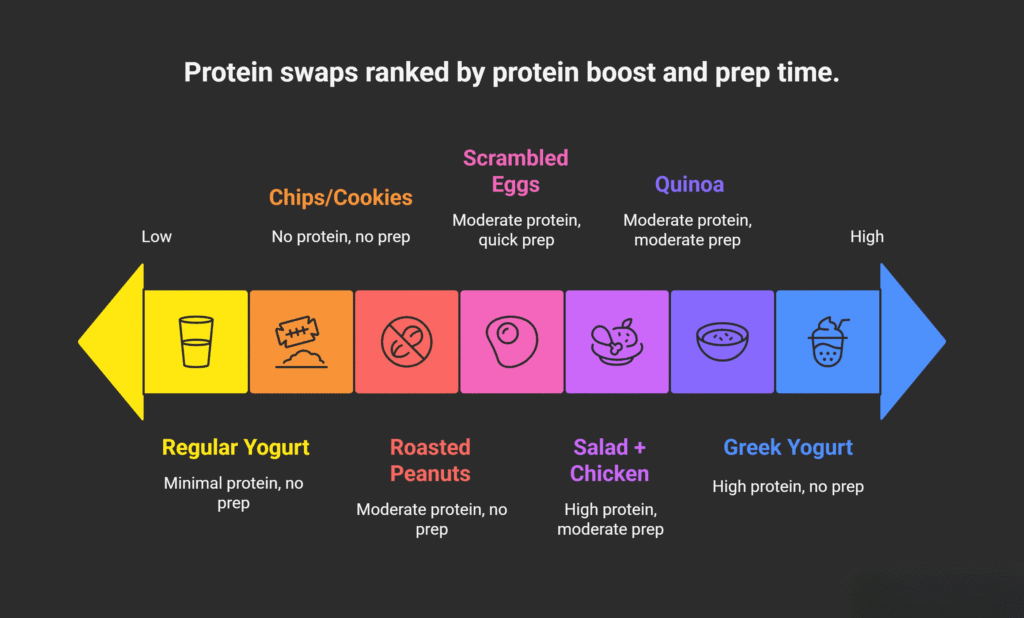
1. Swap Regular Yogurt for Greek Yogurt
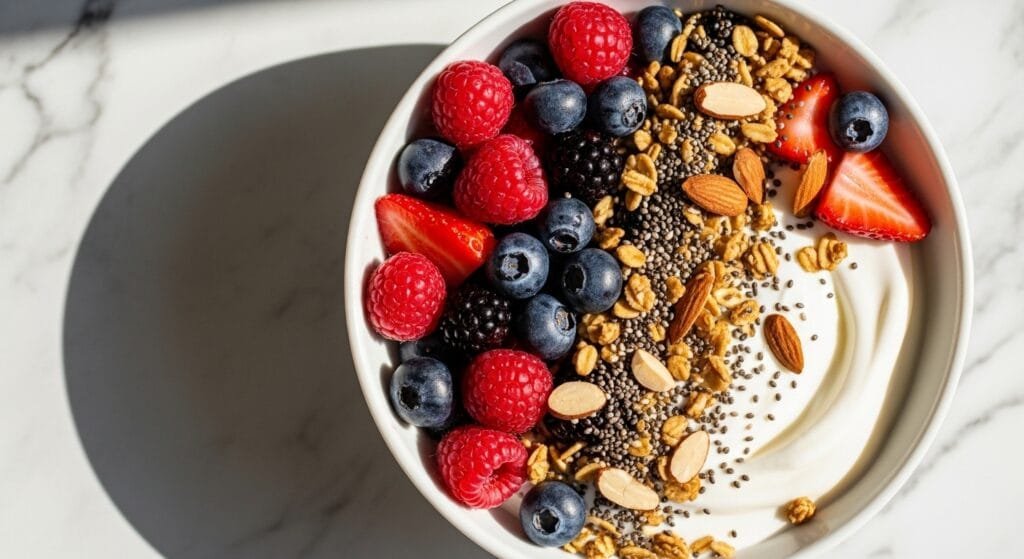
Regular yogurt is fine, but Greek yogurt packs nearly double the protein thanks to a straining process that concentrates nutrients. A 200-gram serving of Greek yogurt delivers about 18 to 20 grams of protein, compared to roughly 10 grams in the same amount of regular yogurt.
Why it works: Greek yogurt keeps you full longer and pairs perfectly with fruit, nuts, or a drizzle of honey. Toss in chia seeds or pumpkin seeds for an extra protein and healthy-fat boost.
Quick tip: Buy plain Greek yogurt and add your own toppings to control sugar. Flavored versions can sneak in a lot of added sweetness.
2. Choose Higher-Protein Grains and Legumes
Not all grains and legumes are created equal. Swapping white rice for quinoa or switching from moong dal to black urad or rajma can add several grams of protein per serving. A cooked cup of quinoa offers about 8 grams of protein, while a cup of cooked rajma (kidney beans) delivers around 15 grams.
Why it works: These plant-based proteins pair with veggies and lean meats to create balanced, satisfying meals. Plus, legumes are budget-friendly and shelf-stable—perfect for busy weeks.
Quick tip: Make a big batch of quinoa or dal on Sunday and portion it into containers. You’ll have a ready-to-go protein base for lunches and dinners all week.
3. Upgrade Your Breakfast Routine
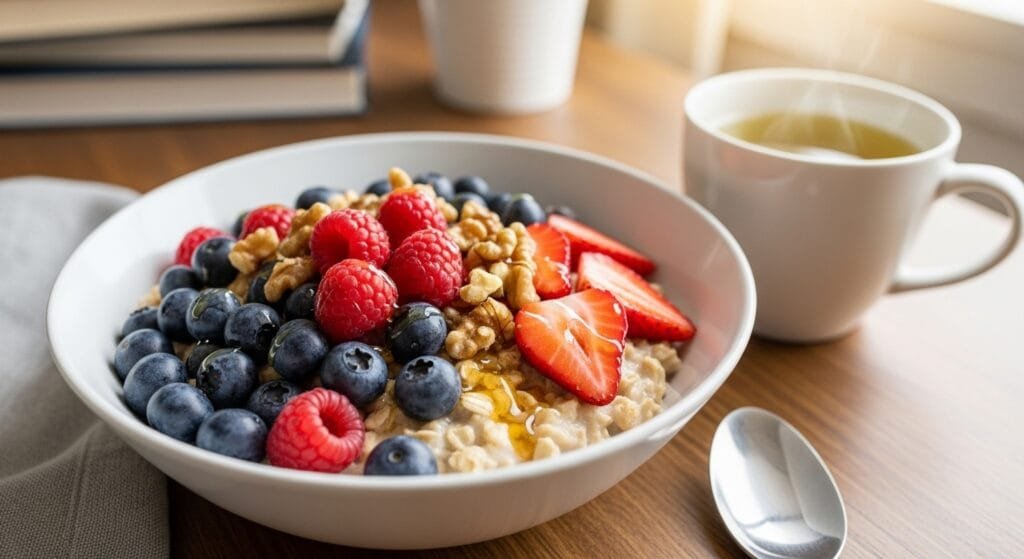
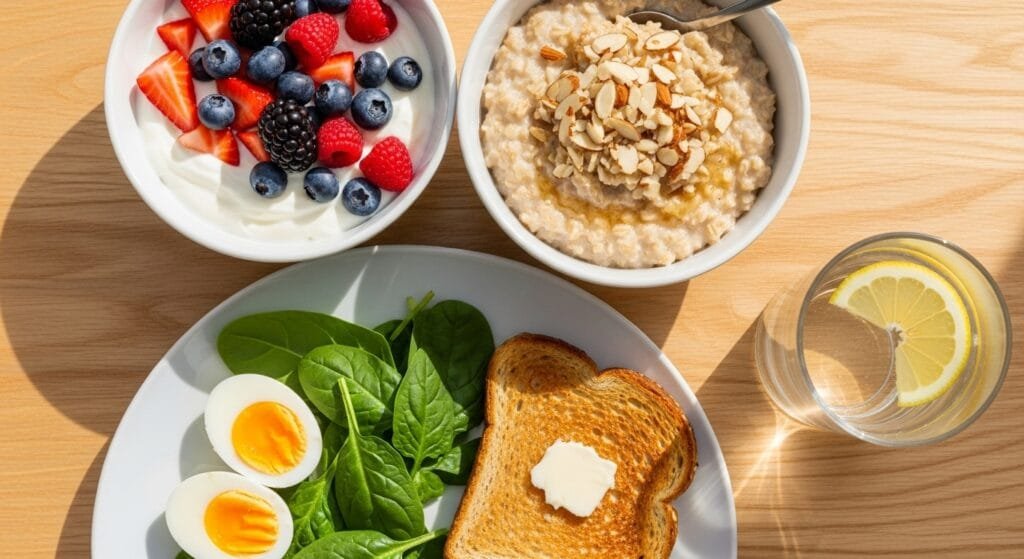
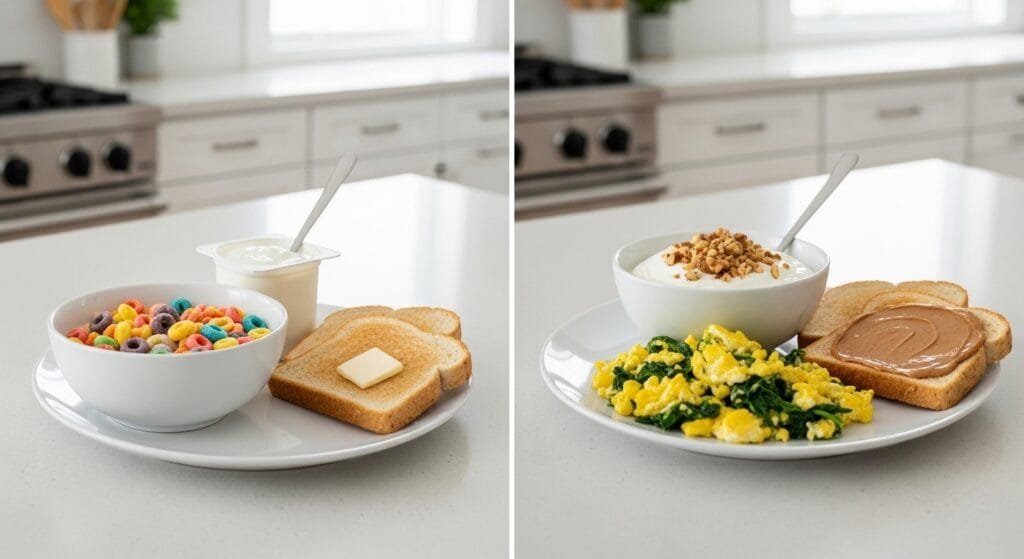
Traditional breakfasts like sugary cereals or plain toast don’t offer much staying power. Instead, try scrambled eggs with spinach, a veggie-packed besan chilla (chickpea flour pancake), or overnight oats mixed with protein powder and almond butter.
Why it works: A protein-strong breakfast steadies your energy, mood, and hunger right from the start. One large egg gives you about 6 to 7 grams of protein, and a bowl of overnight oats with protein powder can deliver 25 grams or more.
Quick tip: Prep egg muffins on the weekend—whisk eggs, add veggies and cheese, pour into a muffin tin, and bake. Grab one or two on your way out the door.
4. Snack Smarter with Nuts, Seeds, and Protein-Rich Options
Ditch the chips and cookies. Reach for roasted peanuts, pumpkin seeds, or a small piece of paneer (Indian cottage cheese) or tofu instead. A 30-gram serving of roasted peanuts gives you about 7 grams of protein, and 100 grams of paneer provides 16 to 20 grams.
Why it works: These snacks pack protein, healthy fats, and minerals that keep you satisfied between meals without spiking your blood sugar.
Quick tip: Portion nuts and seeds into small bags or containers at the start of the week. That way, you won’t overeat, and you’ll always have a grab-and-go option.
5. Add a Protein Boost to Lunch and Dinner
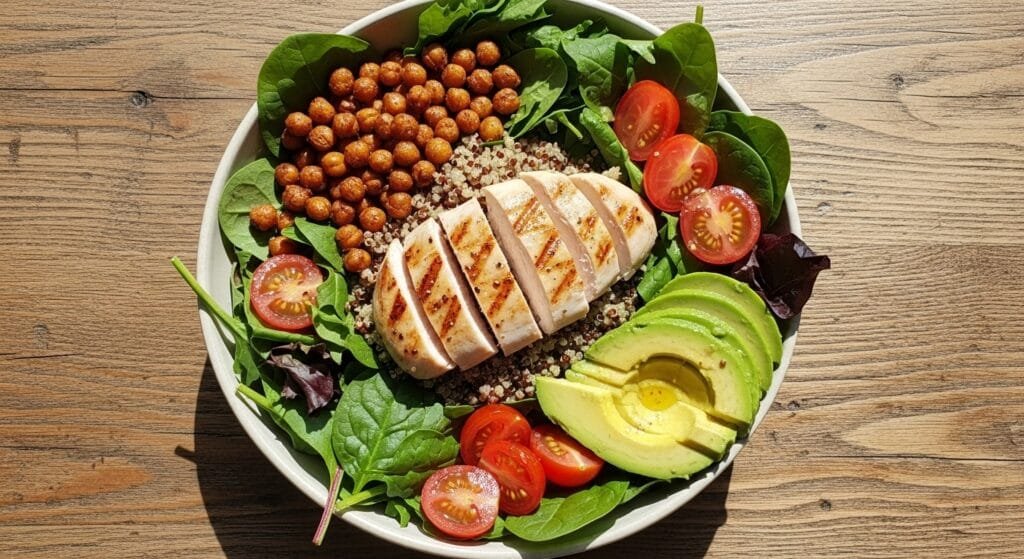
If your go-to lunch is a plain salad or veggie stir-fry, add grilled chicken, tofu, chickpeas, or a boiled egg. A grilled chicken quinoa bowl can deliver 32 grams of protein, while a tofu stir-fry with brown rice offers about 28 grams.
Why it works: Adding a protein source transforms a light side into a complete, filling meal. You’ll skip the 3 p.m. energy crash and stay focused until dinner.
Quick tip: Marinate tofu or paneer for at least 15 minutes with lemon, ginger-garlic, turmeric, and chili so it soaks up flavor. Batch-cook chicken or tofu on Sunday and use it throughout the week.
Comparing Quick Protein Swaps
Protein Boost Habit Swaps
| Old Habit | New Habit | Protein Boost | Prep Time |
|---|---|---|---|
| Regular yogurt (200g) | Greek yogurt (200g) | +8–10g | 0 min |
| White rice (1 cup) | Quinoa (1 cup) | +3–4g | 15 min |
| Sugary cereal | Scrambled eggs + spinach | +15–20g | 5 min |
| Chips or cookies | Roasted peanuts (30g) | +7g | 0 min |
| Plain salad | Salad + grilled chicken (100g) | +25–30g | 10 min |
Habit Details
Old Habit:
New Habit:
Protein Boost:
Prep Time:
What the Science Says
Research backs up these simple swaps. A high-protein diet promotes muscle maintenance, aids weight loss by increasing satiety, and may support healthier blood sugar levels and bone health. Long-term, eating about 1.0 to 1.6 grams of protein per kilogram of body weight daily is safe and effective for most healthy adults. People over 65 may benefit from a bit more—around 1.2 to 1.6 grams per kilogram—to prevent age-related muscle loss.
That said, you don’t need to go overboard. Consuming more than 40 grams of protein in one sitting isn’t more beneficial than spreading it across meals. Stick to 15 to 30 grams per meal, and you’ll hit your daily target without waste or discomfort.
Practical Tips for Sticking with It
Start small. Pick one or two swaps this week. Once they feel natural, add another. You don’t have to change everything at once.
Meal-prep strategically. Cook proteins like chicken, tofu, eggs, or legumes in bulk on Sunday. Store them in the fridge and mix-and-match throughout the week.
Keep backup snacks handy. Stash single-serve Greek yogurt cups, roasted nuts, or protein bars in your bag, car, or desk drawer. When hunger hits, you’ll have a healthy option ready.
Read labels on supplements. If you do use protein powders or bars, choose options with 2 grams or less of saturated fat, 5 grams of sugar or fewer, and about 200 calories or less per serving. Look for third-party testing labels like NSF Certified for Sport to ensure you’re getting what the label promises.
Why High-Protein Habits Work for Busy Americans
Life moves fast. Between work deadlines, family commitments, and personal goals, finding time to eat well can feel impossible. But protein-rich meals and snacks don’t require complicated recipes or hours in the kitchen. The five swaps above take minimal effort and deliver maximum impact—more energy, better focus, and less hunger between meals.
Plus, protein trends are growing. Searches for protein-rich foods jumped significantly in 2024, and experts predict this focus will continue into 2025 and beyond. You’re not alone in wanting to eat smarter—you’re joining millions of Americans who are discovering how a few small changes can make a big difference.
So grab that Greek yogurt, toss some nuts in your bag, and swap your plain rice for quinoa tonight. Your body—and your schedule—will thank you.
This article is part of our 7 Nutrition Habits for Energy & Longevity That Actually Work pillar guide, where we break down simple, science-backed eating habits that support sustained energy, metabolic health, and long-term longevity.
My Experience & Insights
While researching protein intake patterns for this article, I noticed a common problem: most people have no idea how much protein they’re actually eating or how much they need. We hear recommendations like “eat more protein,” but without context, that advice feels vague and hard to follow.
To make this easier, I developed two simple web tools that anyone can use. The first is a Protein Swap Calculator that instantly shows you the protein gains from switching your current foods to high-protein alternatives. You enter what you’re eating now—say, regular yogurt and white rice—along with your portion sizes, and it compares that to higher-protein options like Greek yogurt and quinoa. You get a side-by-side protein comparison, your daily total, and suggestions for even better alternatives. It’s a quick reality check that helps you see where small changes add up.
The second tool is a Protein Target Finder that calculates your ideal daily protein needs based on your lifestyle and goals. You plug in your weight, activity level, age, and fitness goals (like building muscle or just maintaining health), and it gives you a personalized daily protein target plus a meal-by-meal breakdown. This approach is grounded in research showing that protein needs vary significantly based on activity level—from 0.8 grams per kilogram for sedentary adults up to 1.6 to 2.0 grams per kilogram for strength-trained athletes.
What surprised me most during my research was learning that older adults may need slightly more protein—around 1.2 to 1.6 grams per kilogram—to prevent age-related muscle loss, or sarcopenia. That’s higher than the standard recommendation, yet many older folks still follow outdated guidelines. Similarly, people cutting calories should aim for the higher end of protein recommendations to protect muscle mass while losing fat.
These tools aren’t meant to replace professional nutrition advice, but they do give you a starting point backed by established dietary guidelines. When you know your target and can visualize what each swap contributes, sticking with high-protein habits becomes a lot less overwhelming.
Protein Optimization Tools
Calculate your protein needs and discover easy food swaps to boost your intake
Protein Swap Calculator
See how much protein you can gain by switching your current foods to high-protein alternatives
Your Protein Swap Results
Tips for Success
Protein Target Finder
Calculate your ideal daily protein needs based on your body and lifestyle
Your Personalized Protein Plan
Distribution Tips
Frequently Asked Questions
How much protein do I really need per day?
Most healthy adults need about 0.8 to 1.6 grams of protein per kilogram of body weight daily, depending on activity level. For a 150-pound (68 kg) person, that’s roughly 68 to 109 grams per day. If you’re very active, building muscle, or over 65, you may need closer to 1.2 to 1.6 grams per kilogram. Spreading your intake across meals—aiming for 15 to 30 grams per meal—helps your body use protein most effectively.
What’s the easiest high-protein swap for breakfast?
Swap sugary cereal or regular yogurt for Greek yogurt with nuts and berries, or make scrambled eggs with spinach. Greek yogurt contains nearly double the protein of regular yogurt (about 18-20 grams per 200-gram serving versus 10 grams), and two eggs deliver around 12-14 grams. Both options take 5 minutes or less and keep you full until lunch.
Can I get enough protein without meat?
Absolutely! Quinoa, legumes (black beans, chickpeas, lentils), Greek yogurt, paneer, tofu, nuts, and seeds are all excellent protein sources. A cup of cooked quinoa has about 8 grams of protein, while a cup of chickpeas provides around 15 grams. Combining different plant proteins throughout the day ensures you get all essential amino acids.
Is it bad to eat too much protein?
For most healthy adults, consuming 1.0 to 1.6 grams of protein per kilogram of body weight is safe long-term. However, eating more than 40 grams in one sitting isn’t more beneficial than spreading it across meals. If you have kidney disease or other health conditions, consult your doctor before significantly increasing protein intake. Balanced nutrition—including vegetables, whole grains, and healthy fats—is always important.
What are the best high-protein snacks for busy people?
The easiest grab-and-go options include single-serve Greek yogurt cups, roasted nuts (almonds, peanuts), string cheese, hard-boiled eggs, protein bars (look for 10+ grams protein and under 5 grams sugar), and edamame. Portion these into small containers at the start of the week so you always have a protein-rich snack ready when hunger strikes.
How can I track my daily protein intake easily?
Use a food tracking app like MyFitnessPal or Cronometer, read nutrition labels on packaged foods, or use online protein calculators to estimate your needs and compare foods. Many apps let you set daily protein goals and scan barcodes for instant nutrition info. For a simpler approach, aim for a palm-sized portion of protein at each meal (about 20-30 grams) and include a protein source in every snack.
💊 Do not rely solely on online content for diagnosis or treatment.
📜 Information here is provided “as is” without any warranties.